



May 8, 2026
Adipotide, also known as FTTP (Fat Targeted Pro-apoptotic Peptide), is an experimental peptidomimetic research agent designed to target and eliminate white adipose tissue. Research indicates that Adipotide operates through a unique mechanism compared to traditional metabolic peptides; rather than suppressing appetite or increasing energy expenditure, it specifically targets the blood supply of fat cells. (1)
Preclinical studies in primate models have demonstrated significant potential for Adipotide in reducing body weight and improving insulin sensitivity. By inducing apoptosis in the blood vessels that support white fat, the peptide causes the fat cells to atrophy, leading to a rapid reduction in adipose mass.
What is the mechanism by which Adipotide exerts its effects?
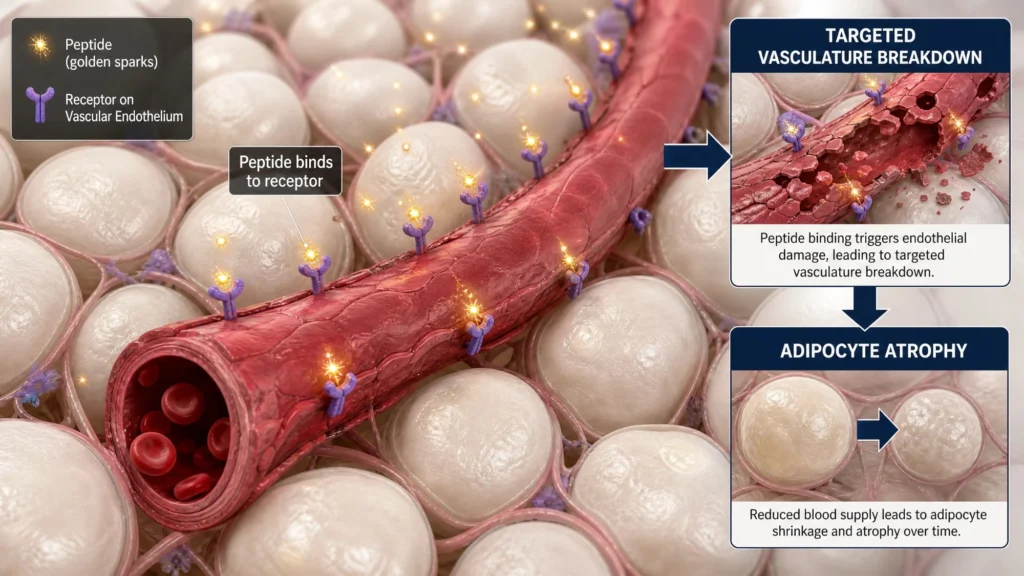
The mechanism underlying Adipotide’s action is defined by its ability to induce targeted Apoptosis (programmed cell death) within the vasculature of white adipose tissue. The peptide is composed of two functional domains: a homing domain that binds to a specific receptor on fat-supporting capillaries, and a pro-apoptotic domain that disrupts the mitochondrial membrane of those cells. (2)
Upon introduction into a research model, Adipotide appears to:
- Target ANXA2 and Prohibitin: It identifies and binds to specific proteins—Annexin A2 and Prohibitin—expressed on the surface of blood vessels supplying white adipose tissue.
- Disrupt Mitochondrial Integrity: Once bound, the peptide’s pro-apoptotic sequence (proapoptotic peptide (KLAKLAK)2) triggers mitochondrial membrane leakage in the endothelial cells.
- Induce Vascular Atrophy: The destruction of these vessels starves the fat cells of oxygen and nutrients, leading to cell death and the subsequent absorption of the lipids into the metabolic stream. (3)
Research suggests that because the peptide specifically targets the vasculature of white fat, the “brown fat” (thermogenic fat) and other vital organs remain unaffected, theoretically allowing for a highly specific reduction in harmful visceral and subcutaneous fat.
How was Adipotide discovered?
Adipotide was developed by researchers at the MD Anderson Cancer Center. The goal was to apply the principles of anti-angiogenic cancer therapy to the field of obesity research. Scientists hypothesized that if they could destroy the specific blood vessels that support fat tissue expansion—much like starving a tumor—they could achieve rapid and significant fat loss.
Early investigations in rodents and later in rhesus monkeys confirmed that the peptide could distinguish between adipose-supporting vessels and those of other systems. The discovery was considered a major breakthrough because it represented the first successful attempt to treat obesity by targeting the tissue’s infrastructure rather than the brain’s hunger centers. (4)
Research Studies on Adipotide Peptide
Adipotide and Primate Weight Loss Dynamics
The role of Adipotide in non-human primate research was investigated to observe its impact on spontaneous obesity. In rhesus monkeys, daily administration of the peptide resulted in an average weight loss of 11% over a 28-day period. Further analysis revealed that the loss was almost entirely comprised of adipose tissue, with the researchers noting a significant reduction in the “area under the curve” for insulin, indicating a profound improvement in metabolic health. (5)
Adipotide and Renal Research Considerations
This study aimed to investigate the physiological impact of rapid adipose atrophy on renal function. Results indicated that while Adipotide is highly effective for fat reduction, it exerts a transient effect on the kidneys in high-dose research models. Mechanistically, this is believed to be due to the processing of the peptide’s components, leading researchers to suggest that optimal dosing protocols are essential for maintaining safety profiles during prolonged investigations. (6)
Synopsis
The Adipotide (FTTP) peptide appears to be a revolutionary tool in the study of metabolic intervention. By shifting the focus from caloric intake to the vascular viability of adipose tissue, Adipotide potentially offers a rapid path for studying the reversal of chronic obesity and its comorbid conditions. Its unique “target-and-starve” mechanism warrants deeper investigation into the long-term metabolic stability of research models following significant adipose reduction.
NOTE: These products are intended for laboratory research use only. This peptide is not intended for personal use. Please review and adhere to our Terms and Conditions before ordering.