
AICAR Peptide: Research in Metabolic Activation and Cellular Energy Homeostasis

May 8, 2026
AICAR (Aminoimidazole carboxamide ribonucleotide) is a synthetic analog of adenosine monophosphate (AMP) that serves as a potent metabolic regulator. Research indicates that AICAR is a cell-permeable activator of AMP-activated protein kinase (AMPK), a master switch in cellular energy metabolism. Unlike other metabolic agents, AICAR is recognized in research for its ability to mimic the effects of physical exercise at a cellular level, often referred to in literature as an “exercise mimetic.”
Preclinical investigations have demonstrated that AICAR can shift cellular metabolism from glucose utilization to fat oxidation, potentially improving endurance and insulin sensitivity in research models. Its role in regulating energy balance makes it a primary focus for studies involving metabolic syndrome, type 2 diabetes, and cardiovascular health.
What is the mechanism by which AICAR exerts its effects?
The primary mechanism underlying AICAR’s action involves the direct stimulation of AMPK. By mimicking a state of low cellular energy (high AMP levels), AICAR triggers a cascade of signaling pathways designed to restore energy homeostasis.
Upon introduction into a research model, AICAR appears to:
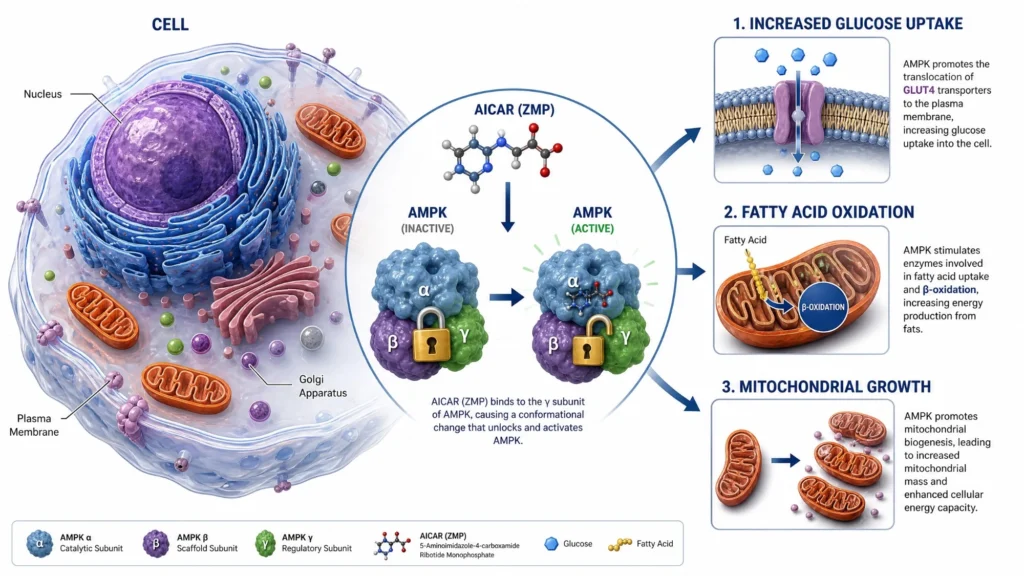
- Activate AMPK: AICAR is converted intracellularly into ZMP, which mimics the effect of AMP, binding to and activating the AMPK enzyme complex.
- Stimulate Glucose Uptake: It promotes the translocation of GLUT4 (glucose transporter 4) to the cell membrane, facilitating glucose entry into skeletal muscle independent of insulin.
- Promote Fatty Acid Oxidation: By inhibiting Acetyl-CoA carboxylase (ACC), AICAR reduces malonyl-CoA levels, thereby increasing the transport of fatty acids into the mitochondria for energy production.
- Enhance Mitochondrial Biogenesis: Chronic activation of AMPK via AICAR is believed to upregulate PGC-1α, leading to the creation of new mitochondria and increased aerobic capacity.
How was AICAR discovered in research?
AICAR was originally studied as an intermediate in the de novo synthesis of purine nucleotides. However, its metabolic significance became clear in the 1980s and 90s as researchers began to identify the AMPK enzyme and its role as a “metabolic master switch.” Scientists discovered that by introducing AICAR, they could artificially activate this switch without the need for physical exertion or caloric restriction.
This discovery led to landmark studies in the late 2000s, where research models treated with AICAR showed a significant increase in running endurance—up to 44%—without prior training. These findings revolutionized the understanding of how chemical signals can influence physiological performance and tissue adaptation.
Research Studies on AICAR Peptide
AICAR and Exercise Mimicry in Skeletal Muscle
The role of AICAR in enhancing physical performance was investigated to determine if metabolic adaptations could occur in a sedentary state. In murine models, administration of AICAR for four weeks resulted in the transformation of muscle fibers into “slow-twitch” oxidative fibers. These fibers are more resistant to fatigue, suggesting that AICAR potentially reprogrammed the genetic expression of the muscle to favor endurance-based metabolism.
AICAR and Insulin Sensitivity
This study aimed to investigate the effects of AMPK activation on insulin resistance. Results indicate that AICAR administration can significantly improve glucose tolerance in models of diet-induced obesity. Mechanistically, by activating the AMPK pathway, AICAR appears to bypass insulin signaling defects, providing a secondary route for glucose disposal and reducing the metabolic burden on the pancreas.
Synopsis
AICAR (Aminoimidazole carboxamide ribonucleotide) appears to be a powerful tool for investigating the complexities of cellular energy regulation. By acting as a selective AMPK activator, it provides a unique window into the molecular pathways associated with exercise, fat oxidation, and glucose management. Further investigations are warranted to fully understand its impact on systemic energy balance and its potential to counteract metabolic decline in scientific research.
NOTE: These products are intended for laboratory research use only. This peptide is not intended for personal use. Please review and adhere to our Terms and Conditions before ordering.