



May 8, 2026
ARA-290, also known as Cibinetide, is a synthetic 11-amino acid peptide derived from the structure of erythropoietin (EPO). Research indicates that ARA-290 is a selective agonist of the Innate Repair Receptor (IRR). Unlike native EPO, which stimulates red blood cell production (erythropoiesis), ARA-290 is engineered to trigger only the tissue-protective and anti-inflammatory pathways, making it a primary focus for investigating chronic pain and inflammatory diseases.
Preclinical studies have suggested that ARA-290 may provide significant relief in models of neuropathic pain and sarcoidosis by reducing the production of pro-inflammatory cytokines and promoting the structural repair of small nerve fibers.
What is the mechanism by which ARA-290 exerts its effects?
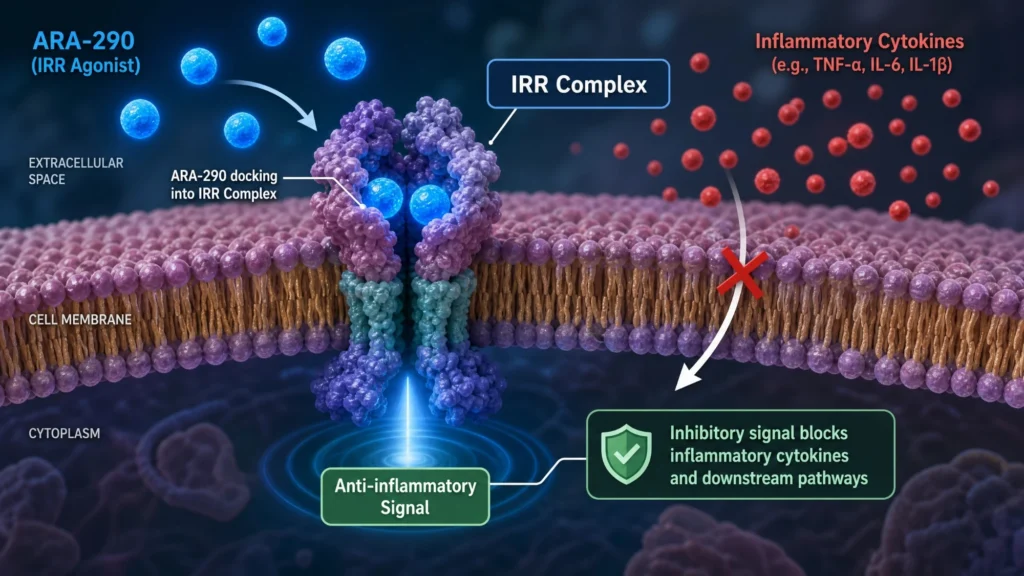
The primary mechanism underlying ARA-290’s action is the high-affinity activation of the Innate Repair Receptor (IRR), a heterocomplex consisting of erythropoietin receptor subunits and the common beta receptor (CD131). This receptor is typically expressed only during tissue stress or injury.
Upon introduction into a research model, ARA-290 appears to:
- Activate the Innate Repair Pathway: By binding to the IRR, it triggers intracellular signaling that inhibits the activation of the “inflammasome” and the production of TNF-alpha and Interleukin-6 (IL-6).
- Protect Small Nerve Fibers: It appears to prevent the retraction and death of small nerve fibers, which are often damaged in conditions like diabetes or sarcoidosis.
- Enhance Wound Healing: Through the modulation of the inflammatory environment, ARA-290 may accelerate the closure of chronic wounds by promoting macrophage polarization toward a “repair” (M2) phenotype.
How was ARA-290 discovered in research?
ARA-290 was discovered through efforts to separate the tissue-protective benefits of Erythropoietin (EPO) from its hematopoietic (blood-building) side effects. Researchers identified that the tissue-protective effects of EPO were mediated by a specific receptor complex (the IRR) that was distinct from the receptors responsible for red blood cell production.
By mapping the specific “face” of the EPO molecule that interacts with the IRR, scientists developed a short, linear peptide—ARA-290—that mimics this interaction perfectly. This allowed researchers to study the potent anti-inflammatory properties of the EPO system without the risk of increasing blood thickness or cardiovascular complications.
Research Studies on ARA-290 Peptide
ARA-290 and Small Fiber Neuropathy (SFN)
The role of ARA-290 in neuropathic repair was investigated in patients with sarcoidosis-associated small fiber neuropathy. In these clinical research models, daily administration appeared to significantly improve corneal nerve fiber density and reduce neuropathic pain scores. Researchers noted that the peptide potentially reversed the underlying nerve damage rather than simply masking the pain.
ARA-290 and Metabolic Inflammation
This study aimed to investigate the effects of ARA-290 on insulin resistance and chronic inflammation. Results indicate that by activating the IRR, ARA-290 potentially reduces systemic inflammation in adipose tissue. Mechanistically, this appears to improve glucose handling and lipid profiles in research models of Type 2 Diabetes, suggesting a broad metabolic protective role.
Synopsis
The ARA-290 (Cibinetide) peptide appears to be a highly specialized modulator of the body’s innate repair system. By selectively targeting the IRR, it provides a unique pathway for studying the resolution of chronic inflammation and the regeneration of damaged peripheral nerves. Further investigations are warranted to fully understand its long-term impact on autoimmune regulation and tissue homeostasis in scientific research.
NOTE: These products are intended for laboratory research use only. This peptide is not intended for personal use. Please review and adhere to our Terms and Conditions before ordering.