

May 13, 2026
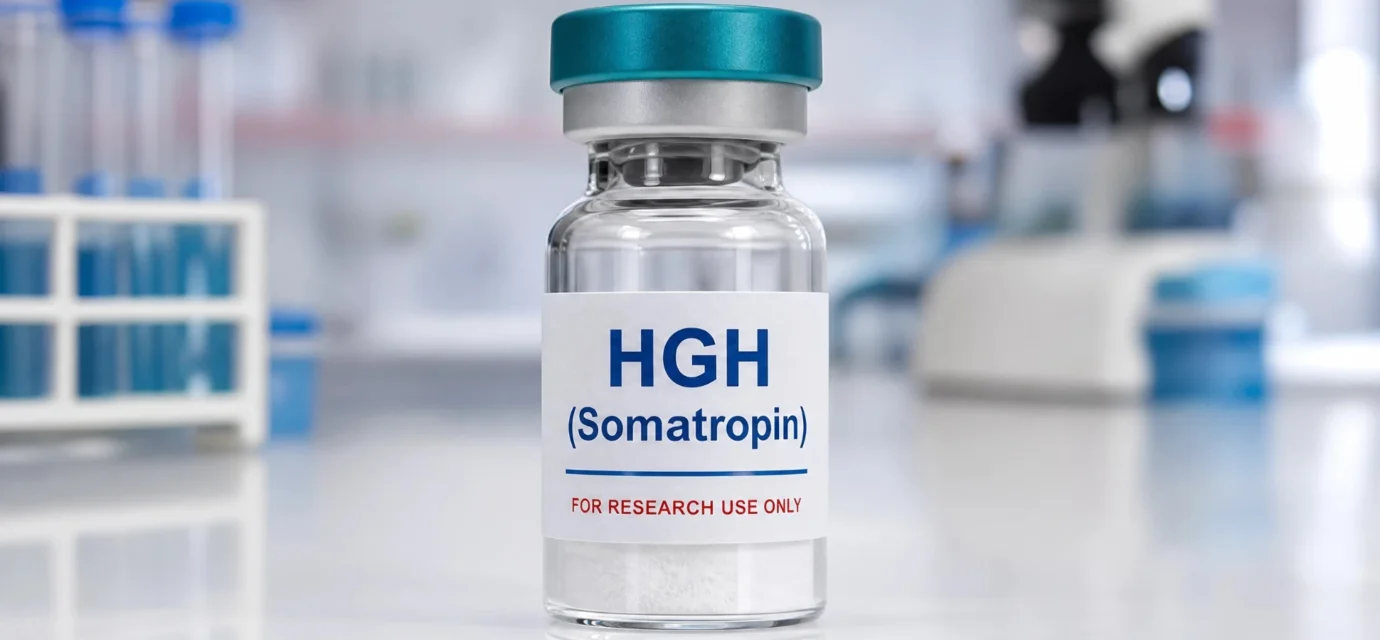
Human Growth Hormone (HGH), also known as Somatropin, is a 191-amino acid single-chain polypeptide produced by the somatotropic cells of the anterior pituitary gland. Research indicates that HGH is the primary hormonal driver of growth, development, and tissue maintenance throughout the lifespan. Extensive preclinical studies utilizing animal models have indicated the potential efficacy of HGH in stimulating protein synthesis and regulating carbohydrate and lipid metabolism. These studies have suggested that the peptide plays a foundational role in investigating cellular regeneration and the reversal of age-related physiological decline.(1)
What is the mechanism by which HGH exerts its effects?
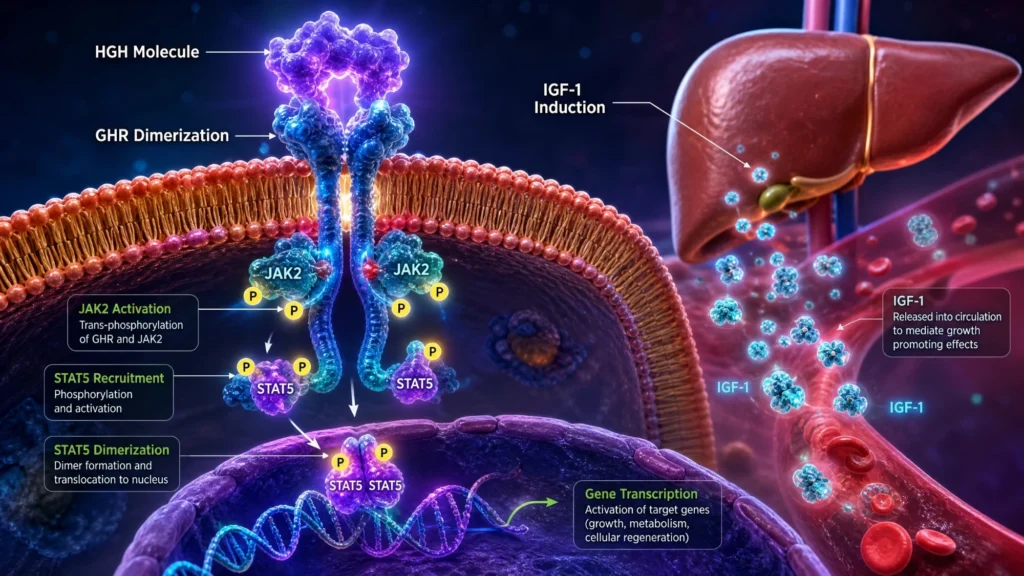
The mechanism underlying HGH’s proposed biological action involves its interaction with the Growth Hormone Receptor (GHR), a member of the cytokine receptor superfamily. Upon presentation, a single HGH molecule binds to two GHR molecules, potentially triggering receptor dimerization. This interaction appears to cause the activation of the intracellular Janus kinase 2 (JAK2) and the subsequent phosphorylation of Signal Transducers and Activators of Transcription (STAT) proteins, particularly STAT5.
Recent investigations suggest that many of HGH’s effects are mediated indirectly through the induction of Insulin-like Growth Factor 1 (IGF-1), primarily in the liver. Studies suggest the potential involvement of the HGH-IGF-1 axis in promoting the proliferation of chondrocytes in bone and the hypertrophy of skeletal muscle fibers. Furthermore, HGH is believed to exert direct lipolytic effects by potentially upregulating hormone-sensitive lipase, thereby facilitating the mobilization of fatty acids from adipose tissue in research models.(1) (2)
How was the HGH peptide discovered?
The discovery of Human Growth Hormone evolved through decades of endocrinological study, beginning with early 20th-century observations that pituitary extracts could restore growth in hypophysectomized animals. In the 1950s, researchers successfully isolated the hormone from human cadaveric pituitary glands, a discovery that allowed for the first experimental treatments of growth deficiencies.
Building upon these findings, the development of recombinant DNA technology in the 1980s allowed for the production of biosynthetic HGH (Somatropin), which is identical in sequence to the natural human hormone. Specifically, the production of recombinant HGH eliminated the risks associated with cadaveric sources and provided a standardized medium for studying the precise protein-protein interactions necessary for tissue repair and metabolic optimization in laboratory settings.(3)
Research Studies on HGH
HGH and Tissue Repair Dynamics
The role of HGH in systemic tissue repair was investigated to elucidate its potential to accelerate wound healing and bone density recovery. Using rodent models of injury, the impact of HGH was evaluated on collagen deposition and mineral density. This study suggested that HGH may significantly increase the rate of osteoblast proliferation compared to findings yielded by the control group. Histological analyses revealed that upon HGH introduction, it may potentially yield improved structural integrity in damaged connective tissues and probably result in enhanced protein retention. Mechanistically, HGH appears to activate the JAK/STAT pathway, potentially promoting robust cellular renewal.(4)
HGH and Neuro-Metabolic Homeostasis
This study aimed to investigate the role of HGH as a modulator of cognitive function and neural survival. Results indicate that HGH potentially interacts with receptors in the hippocampus and cerebral cortex, resulting in potential positive regulation of neurogenesis and synaptic plasticity. In vitro experiments using neuronal cultures suggest that the peptide may play a role in protecting cells from excitotoxicity, as indicated by potential differential regulation of anti-apoptotic proteins. Research further suggests that in metabolic models, the influence of HGH may synergistically enhance the mobilization of visceral fat and potentially improve nitrogen balance. Researchers state that “HGH disrupted the progression of cellular atrophy and activated intrinsic growth signaling in vitro.”(5)
Synopsis
Human Growth Hormone appears to be a promising modulator of systemic growth and metabolic signaling pathways. By activating the GHR and disrupting the negative effects of somatopause and cellular aging, HGH appears to stimulate the body’s innate regenerative mechanisms, potentially leading to enhanced cellular responses and improved tissue quality in research models. Studies have suggested its potential in treating muscle wasting and exploring the molecular biology of longevity. Further investigations are warranted to fully elucidate its underlying mechanisms and evaluate its applications in scientific research.
NOTE: These products are intended for laboratory research use only. This peptide is not intended for personal use. Please review and adhere to our Terms and Conditions before ordering.



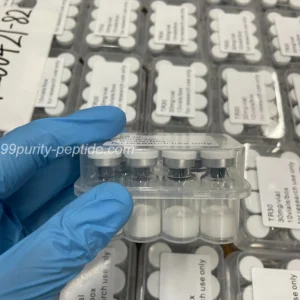




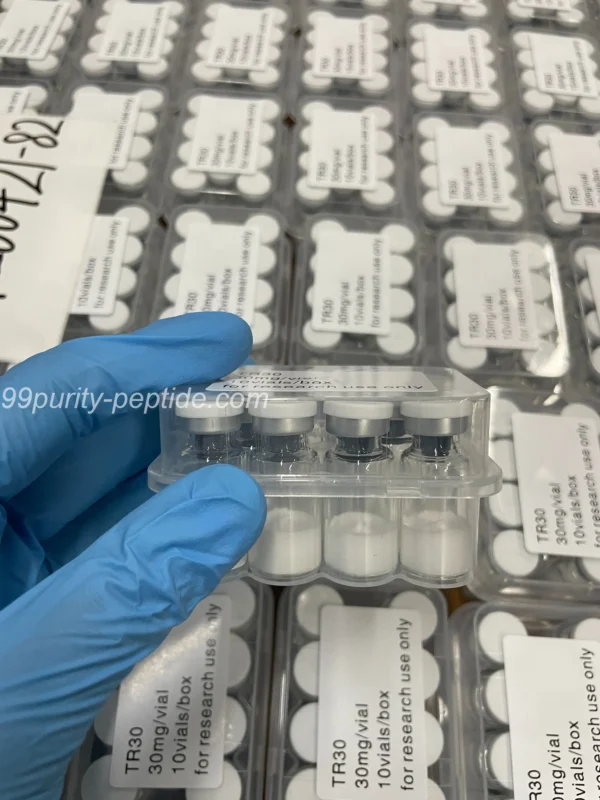
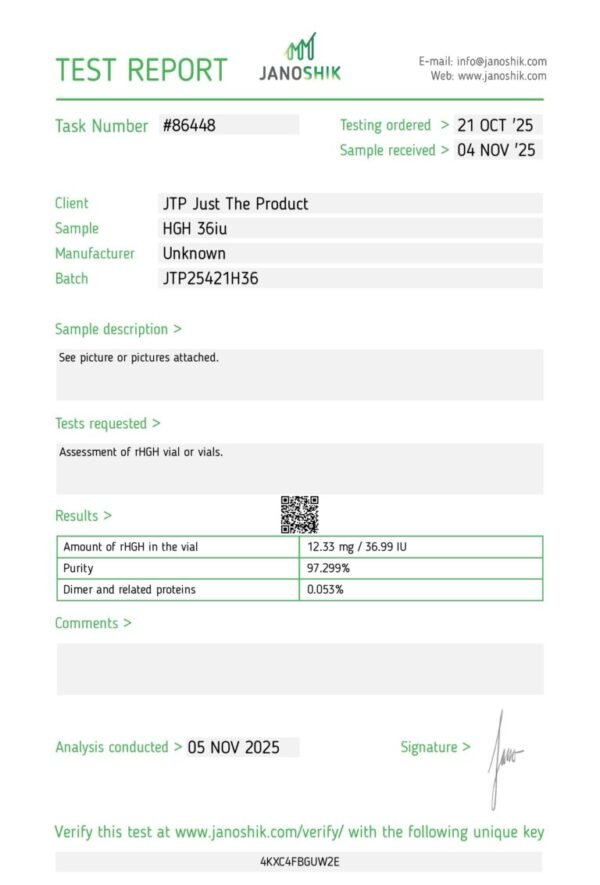
HGH (Human Growth Hormone) 36iu – Somatotropic Signaling & Proteostasis Research
High-purity Recombinant Human Growth Hormone (rhGH). Engineered for laboratory research into somatotropic signaling, lean tissue preservation, and systemic metabolic optimization.