

May 13, 2026
Hexarelin Acetate is a synthetic hexapeptide ($His-D-2-methyl-Trp-Ala-Trp-D-Phe-Lys-NH_2$) that research indicates is one of the most potent members of the Growth Hormone Releasing Peptide (GHRP) family. It is a chemically stable analogue of GHRP-6, engineered for high metabolic resistance. Extensive preclinical studies utilizing animal models have indicated the potential efficacy of Hexarelin in stimulating the release of growth hormone (GH) without the significant appetite-stimulating side effects often associated with other ghrelin mimetics. Beyond its endocrine properties, Hexarelin is considered a key subject in investigating the protection of cardiovascular tissues.(1)
What is the mechanism by which Hexarelin Acetate exerts its effects?
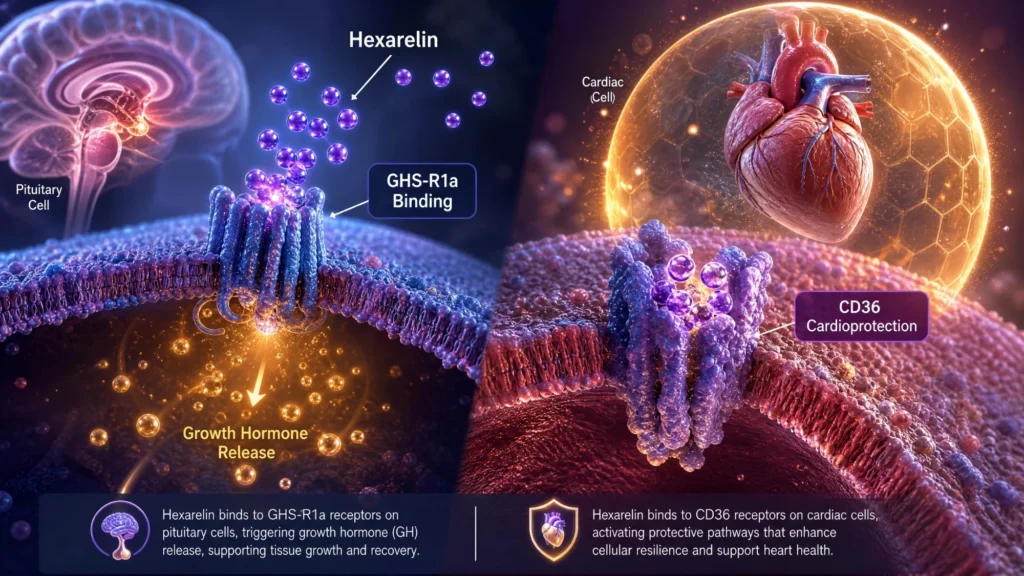
The mechanism underlying Hexarelin Acetate’s proposed biological action involves its potential to interact with two distinct receptor types: the growth hormone secretagogue receptor (GHS-R1a) and the CD36 scavenger receptor. Upon presentation, Hexarelin appears to bind to GHS-R1a in the pituitary gland and hypothalamus, potentially triggering a phosphoinositol-dependent signaling pathway. This interaction appears to cause a rapid, pulsatile release of GH, which is considered crucial for systemic anabolic processes and tissue repair.
Unlike many other GHRPs, Hexarelin also demonstrates a high affinity for the CD36 receptor, particularly in cardiac and vascular tissues. Studies suggest the potential involvement of this interaction in modulating myocardial function and protecting against ischemic injury. Furthermore, Hexarelin is believed to be resistant to degradation by dipeptidyl peptidase-4 (DPP-4), which may play a role in its sustained biological activity compared to endogenous ghrelin in research models.(1) (2)
How was the Hexarelin Acetate peptide discovered?
The discovery of Hexarelin was part of the evolutionary development of growth hormone secretagogues that began in the late 1970s. Following the identification of GHRP-6, researchers sought to create a hexapeptide with improved stability and more specific physiological effects.
In their investigations, scientists substituted specific amino acids in the GHRP-6 sequence—notably incorporating D-2-methyl-tryptophan—to enhance potency and receptor binding. Specifically, the acetate salt was developed to improve the compound’s solubility for laboratory research. Building upon these findings, Hexarelin emerged as a unique tool that allowed researchers to decouple growth hormone stimulation from the intense hunger signals typically triggered by ghrelin, while simultaneously opening new avenues for studying extra-pituitary receptors like CD36.(3)
Research Studies on Hexarelin Acetate
Hexarelin Acetate and Cardiovascular Resilience
The role of Hexarelin in cardiac tissue was investigated to elucidate its potential to mitigate the effects of myocardial infarction and fibrosis. Using rodent models of heart failure, the impact of Hexarelin was evaluated on left ventricular function and cellular survival. This study suggested that Hexarelin may significantly reduce the area of infarcted tissue compared to findings yielded by the control group. Histological analyses revealed that upon Hexarelin introduction, it may potentially yield a decrease in cardiomyocyte apoptosis and probably result in improved contractile performance. Mechanistically, Hexarelin appears to activate protective pathways via the CD36 receptor, potentially promoting long-term cardiovascular stability.(4)
Hexarelin Acetate and Muscle Homeostasis
This study aimed to investigate the role of Hexarelin as a modulator of skeletal muscle mass and protein balance. Results indicate that Hexarelin potentially interacts with myogenic pathways, resulting in potential negative regulation of muscle-wasting genes like Myostatin. In vitro experiments using myoblast cultures suggest that the peptide may play a role in enhancing cell fusion and diameter, as indicated by potential differential regulation of the IGF-1 pathway. Research further suggests that in aging models, the influence of Hexarelin may synergistically improve physical strength and potentially reduce frailty markers. Researchers state that “Hexarelin disrupted the progression of sarcopenia and activated intrinsic growth signaling in vitro.”(5)
Synopsis
Hexarelin Acetate appears to be a promising modulator of the GH/IGF-1 axis and cardiovascular signaling pathways. By stimulating the GHS-R1a and disrupting the negative effects of oxidative stress through CD36 interaction, Hexarelin appears to activate the body’s innate growth and protective mechanisms, potentially leading to enhanced cellular responses and improved heart function in research models. Studies have suggested its potential in treating cardiac dysfunction and investigating the limits of pituitary stimulation. Further investigations are warranted to fully elucidate its underlying mechanisms and evaluate its applications in scientific research.
NOTE: These products are intended for laboratory research use only. This peptide is not intended for personal use. Please review and adhere to our Terms and Conditions before ordering.
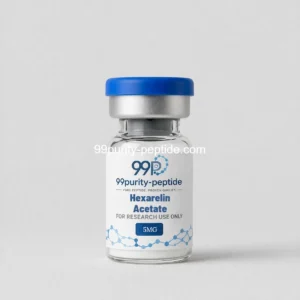
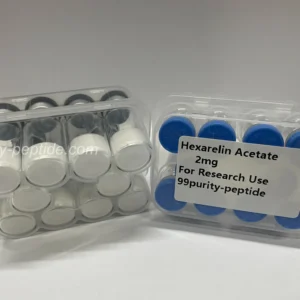
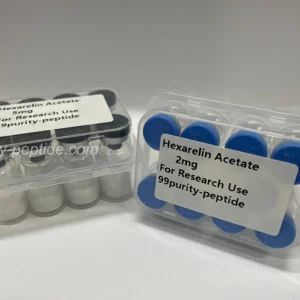
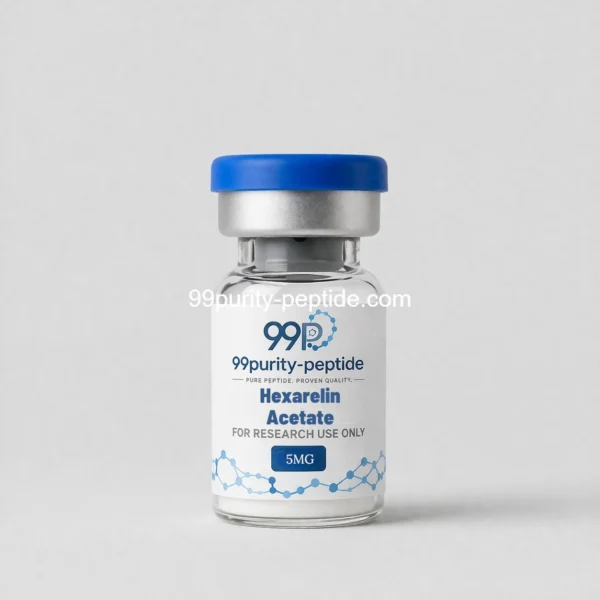
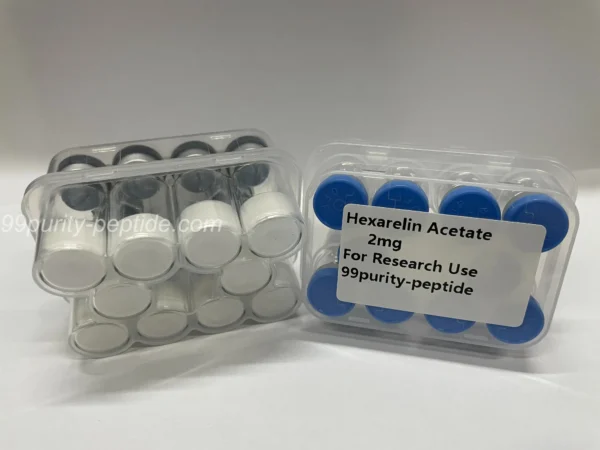
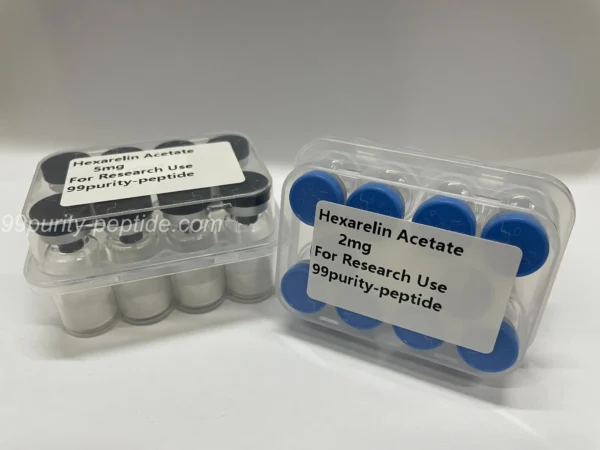
Hexarelin Acetate 5mg – GHS-R Agonism & Myocardial Signaling Research
One of the most potent GHRPs for research into explosive muscle strength, cellular repair, and cardiovascular growth factor signaling. Verified 99% purity.