

May 13, 2026
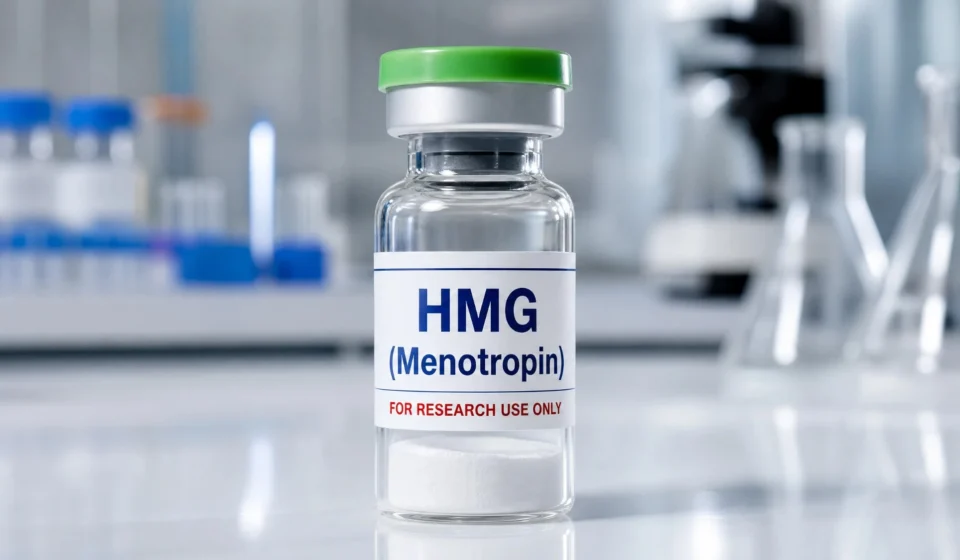
Human Menopausal Gonadotropin (HMG), also known as Menotropin, is a biologically active complex extracted from the urine of postmenopausal women. Research indicates that it is a potent stimulator of the gonads due to its unique composition of both Follicle-Stimulating Hormone (FSH) and Luteinizing Hormone (LH). Extensive preclinical studies utilizing animal models have indicated the potential efficacy of HMG in investigating the dual-pathway stimulation of the Hypothalamic-Pituitary-Gonadal (HPG) axis. These studies have suggested that the peptide complex may play a critical role in regulating follicular maturation in females and supporting spermatogenesis in males.(1)
What is the mechanism by which HMG exerts its effects?
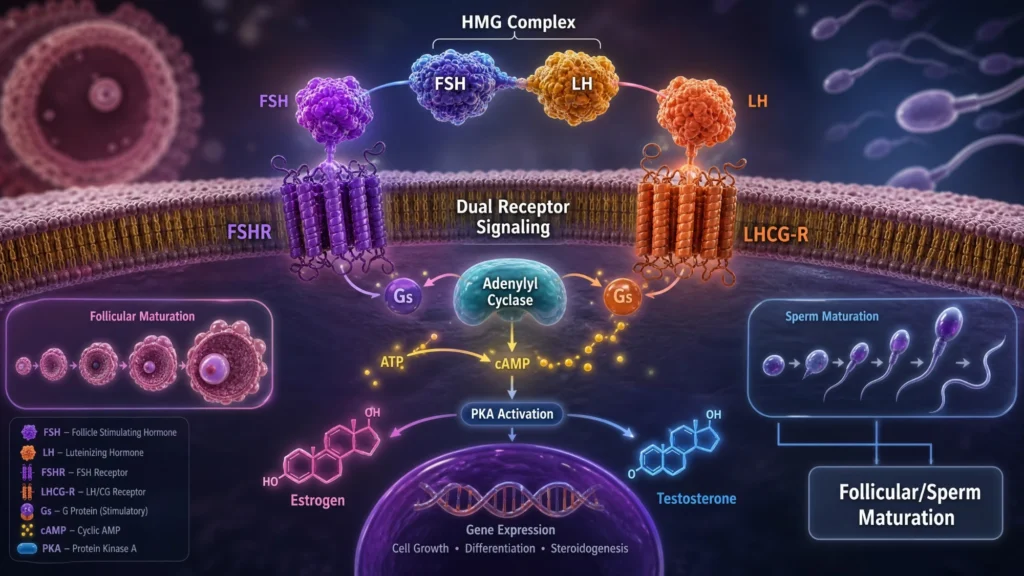
The mechanism underlying HMG’s proposed biological action involves its simultaneous interaction with two distinct G-protein coupled receptors: the FSH receptor (FSHR) and the Luteinizing Hormone/Chorionic Gonadotropin receptor (LHCG-R). Upon presentation, the FSH component of HMG appears to bind to FSHR on granulosa cells (females) or Sertoli cells (males), potentially triggering the activation of the adenylyl cyclase pathway. This interaction is considered crucial for the recruitment and growth of ovarian follicles or the initiation of sperm production.
Simultaneously, the LH component of HMG binds to LHCG-R on theca cells or Leydig cells, potentially leading to the synthesis of steroid hormone precursors such as androstenedione or testosterone. Recent investigations suggest that this dual-action signaling is more effective at mimicking natural physiological cycles than isolated FSH administration. Studies also suggest the potential involvement of HMG in upregulating aromatase activity, which may play a role in the conversion of androgens to estrogens in research models.(1) (2)
How was the HMG peptide discovered?
The discovery of HMG as a research tool dates back to the mid-20th century when scientists identified that the urine of postmenopausal women contained high concentrations of gonadotropic substances. In their investigations, researchers observed that as the ovaries cease to function during menopause, the lack of negative feedback causes the pituitary gland to secrete significantly elevated levels of both FSH and LH.
Building upon these findings, methods were developed to extract and purify these hormones into a standardized medicinal and research complex. Specifically, the development of Menotropin allowed for the precise study of how exogenous gonadotropins can bypass hypothalamic-pituitary dysfunction. This discovery allowed researchers to target the specific protein-protein interactions necessary for germ cell development and provided a foundational model for studying complex endocrine disorders in laboratory settings.(3)
Research Studies on HMG
HMG and Follicular Dynamics in Ovarian Models
The role of HMG in follicular development was investigated to elucidate its potential to induce multiple oocyte maturation. Using rodent models, the impact of HMG was evaluated on follicle size, count, and estrogen production. This study suggested that HMG may significantly increase the rate of successful follicular maturation compared to findings yielded by the control group. Histological analyses revealed that upon HMG introduction, it may potentially yield improved oocyte quality and probably result in enhanced endometrial thickness as a secondary effect. Mechanistically, HMG appears to activate both FSH and LH pathways, potentially promoting a synergistic environment for reproduction.(4)
HMG and Spermatogenesis Induction
This study aimed to investigate the role of HMG as a modulator of male fertility in hypogonadotropic models. Results indicate that HMG potentially interacts with Sertoli cells to support the structural framework necessary for sperm development. In vitro experiments using testicular tissue cultures suggest that the peptide complex may play a role in maintaining the blood-testis barrier, as indicated by potential differential regulation of tight junction proteins. Research further suggests that in axis-suppressed models, the influence of HMG may synergistically enhance the effects of HCG, potentially leading to a more complete restoration of the reproductive profile. Researchers state that “HMG disrupted the arrest of germ cell maturation and activated systemic reproductive pathways in vitro.”(5)
Synopsis
Human Menopausal Gonadotropin appears to be a promising modulator of dual gonadotropic signaling pathways. By providing both FSH and LH activity and disrupting the negative effects of pituitary insufficiency, HMG appears to activate the body’s innate reproductive and steroidogenic mechanisms, potentially leading to enhanced cellular responses and improved endocrine markers in research models. Studies have suggested its potential in treating complex infertility and exploring the molecular biology of the gonads. Further investigations are warranted to fully elucidate its underlying mechanisms and evaluate its applications in scientific research.
NOTE: These products are intended for laboratory research use only. This peptide is not intended for personal use. Please review and adhere to our Terms and Conditions before ordering.
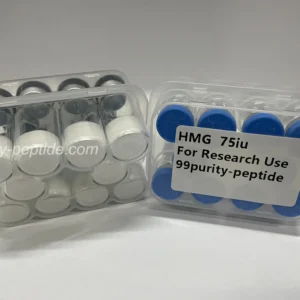
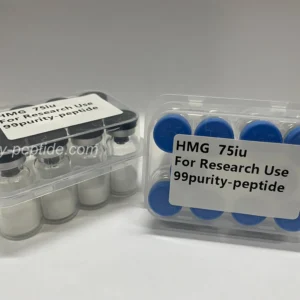
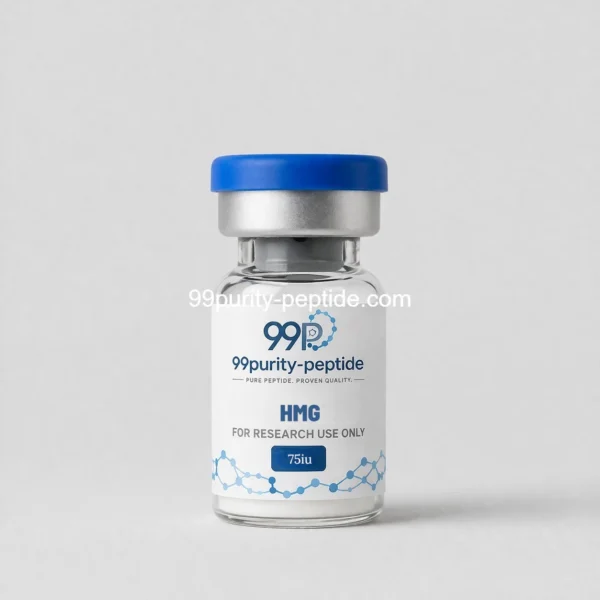
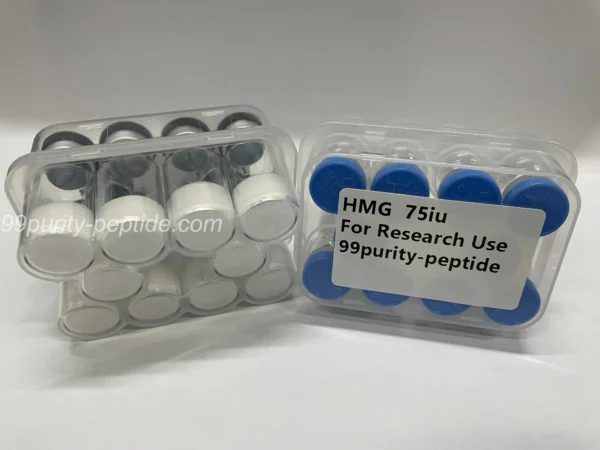
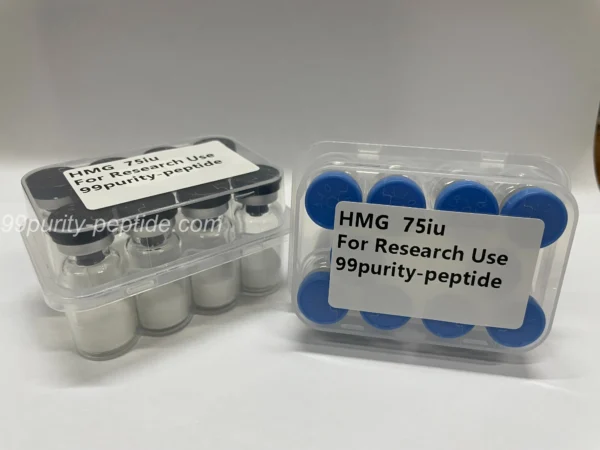
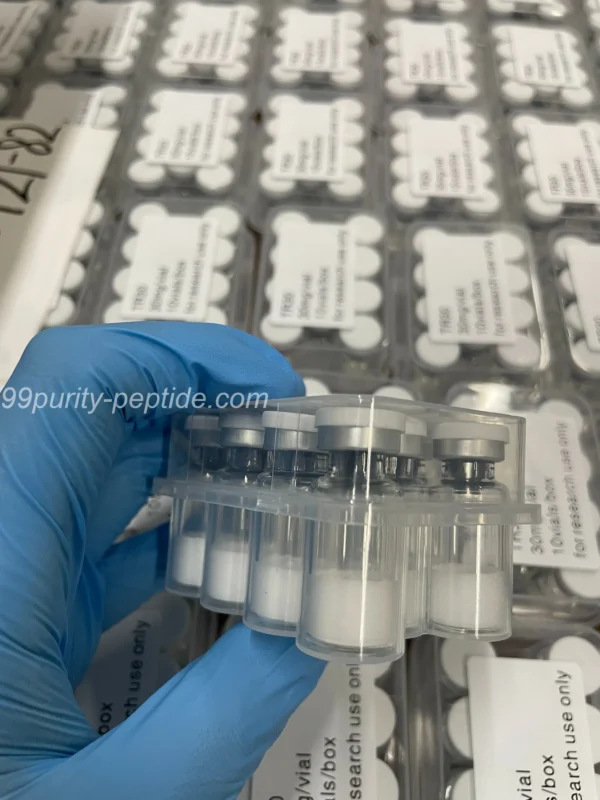
HMG (Human Menopausal Gonadotropin) 75iu – FSH/LH Synergistic Ligand Dynamics & Gonadotropic Signaling Research
High-purity Human Menopausal Gonadotropin. Optimized for research into dual FSH & LH signaling, spermatogenesis pathways, and comprehensive HPTA axis restoration in metabolic studies.