

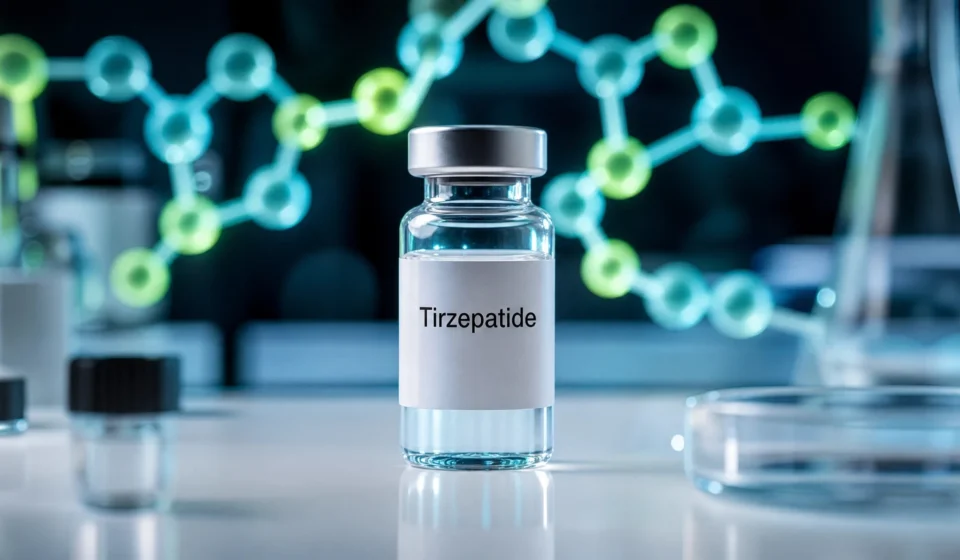
Tirzepatide Peptide: A Dual-Agonist Approach to Metabolic Research and Weight Regulation

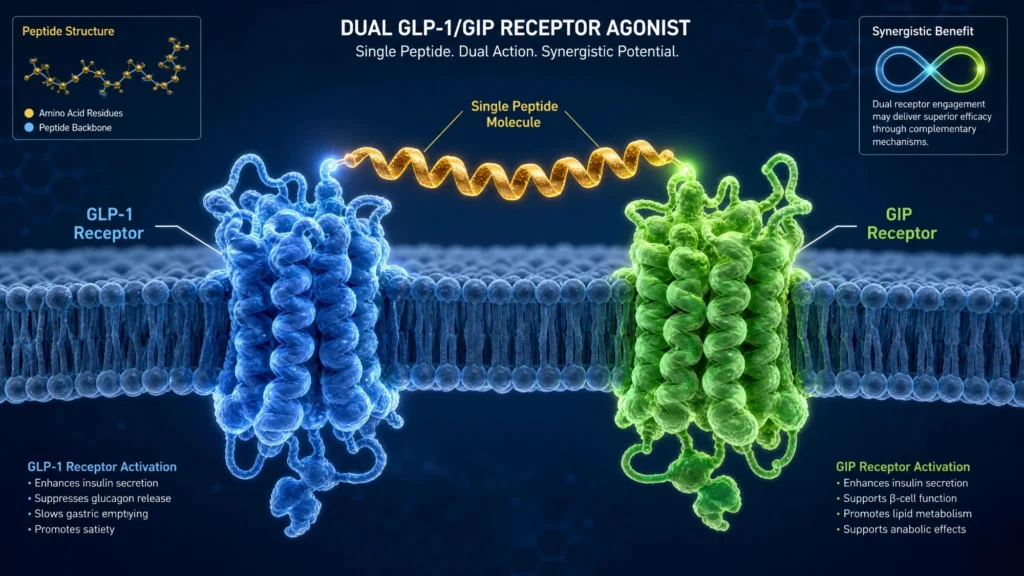
Tirzepatide is a novel, synthetic peptide that research indicates is a first-of-its-kind dual agonist, synergistically combining the properties of Glucose-dependent Insulinotropic Polypeptide (GIP) and Glucagon-like Peptide-1 (GLP-1) receptor agonists. While traditional metabolic research has focused predominantly on the GLP-1 pathway, Tirzepatide’s dual-action mechanism is believed to play a critical role in regulating systemic metabolism, adiposity, and glycemic control.(1)
Extensive clinical and preclinical investigations, most notably within the SURMOUNT and SURPASS trial frameworks, have indicated the potential efficacy of Tirzepatide in achieving significant weight reduction and metabolic recalibration. These studies suggest that the peptide may not only enhance insulin secretion but also optimize lipid metabolism and central satiety signaling, potentially exceeding the benchmarks set by single-agonist therapies.
What is the mechanism by which Tirzepatide exerts its effects?
The mechanism underlying Tirzepatide’s proposed metabolic action appears to involve its bifunctional affinity for both GIP and GLP-1 receptors. Unlike mono-agonists, Tirzepatide is engineered as a single molecule with an 39-amino acid backbone, modified with a C20 fatty diacid moiety to extend its half-life to approximately five days, allowing for sustained receptor activation.(2)
Upon introduction, Tirzepatide appears to interact with:
- GLP-1 Receptors: Located in the pancreas and the hindbrain, activation results in stimulated insulin secretion, inhibited glucagon release, and a marked delay in gastric emptying.
- GIP Receptors: Expressed in the hypothalamus and adipose tissue. GIP signaling is believed to act as a metabolic buffer, potentially mitigating the gastrointestinal sensitivity often associated with GLP-1 activation while simultaneously enhancing the efficiency of fat utilization and energy expenditure.(3)
Recent investigations suggest that this dual-agonist approach may address “incretin resistance,” a common hurdle in chronic metabolic dysfunction. Studies also suggest the potential involvement of the GIP component in enhancing the anti-inflammatory profile of adipose tissue, which is considered a key contributor to long-term metabolic health.
How was Tirzepatide developed in research?
The development of Tirzepatide represents a significant stride in peptide engineering, moving beyond the limitations of native human hormones. Researchers sought to create a “Twincretin” molecule that could leverage the potent glucose-lowering effects of GIP alongside the appetite-suppressant qualities of GLP-1.
In their investigations, research teams observed that while GIP alone had limited effects on weight loss in pathological states, its co-activation with GLP-1 receptors appeared to yield a synergistic response. This interaction appeared to stabilize metabolic flux more effectively than either hormone in isolation. Building upon these findings, Tirzepatide was developed to target the synergy between these two pathways, potentially counteracting the compensatory mechanisms the body uses to resist weight loss.(4)
Research Studies on Tirzepatide Peptide
Tirzepatide and Adipose Tissue Remodeling
The role of Tirzepatide in adipose tissue function was investigated to elucidate its potential to reverse obesity-related metabolic markers. Using animal models, the impact of the peptide was evaluated on “browning” of white adipose tissue and systemic insulin sensitivity. This study suggested that Tirzepatide may significantly decrease visceral fat mass while preserving lean muscle, as compared to findings yielded by placebo-controlled groups. Mechanistically, the dual agonism appears to optimize the storage and oxidation of lipids, potentially preventing the ectopic fat deposition that leads to metabolic syndrome.
Tirzepatide and Neural Satiety Signaling
This study aimed to investigate the role of Tirzepatide in the central nervous system, specifically the arcuate nucleus of the hypothalamus. Results indicate that Tirzepatide potentially interacts with appetite-regulating neurons more profoundly than GLP-1 alone. In vitro and in vivo experiments suggest that the peptide may modulate dopamine-related reward pathways associated with food intake. By disrupting the “hedonic” drive to eat, Tirzepatide appears to facilitate a more sustainable reduction in caloric intake, which researchers state is “a pivotal factor in the long-term management of metabolic homeostasis.”(5)
Synopsis
The Tirzepatide peptide appears to be a transformative modulator of metabolic signaling pathways. By activating the synergistic loop between GIP and GLP-1 receptors, Tirzepatide appears to achieve cellular responses that surpass traditional mono-therapies. Studies have suggested its potential in profound weight regulation, glycemic stabilization, and lipid profile optimization. Further investigations are warranted to fully elucidate its underlying mechanisms in neuro-metabolic crosstalk and evaluate its broader applications in scientific research.
NOTE: These products are intended for laboratory research use only. This peptide is not intended for personal use. Please review and adhere to our Terms and Conditions before ordering.