
Cagrilintide Peptide: Research in Dual-Pathway Appetite Suppression and Metabolic Synergy

May 11, 2026
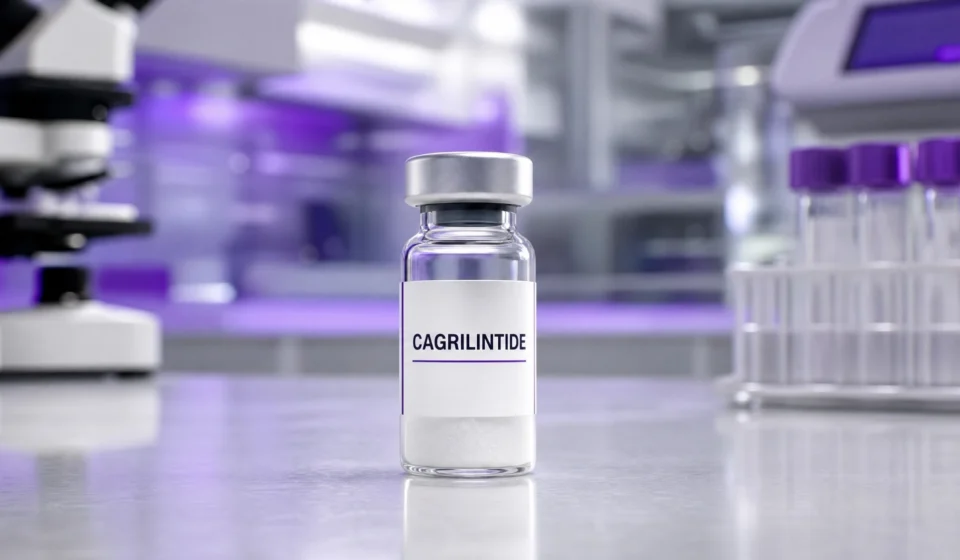
Cagrilintide is an experimental long-acting analogue of the human hormone Amylin. Research indicates that Cagrilintide acts as a non-selective agonist of the amylin receptors (AMYR) and the calcitonin receptors (CTR). While its primary structural basis is rooted in amylin—a hormone co-secreted with insulin by pancreatic beta cells—Cagrilintide has been engineered for enhanced potency and a prolonged half-life, making it a focal point in contemporary metabolic and obesity research. (1)
Preclinical and clinical investigations suggest that Cagrilintide provides a unique mechanism for body weight management. Unlike the GLP-1 analogues that focus largely on the incretin system, Cagrilintide targets the “satiety” signals of the hindbrain, offering a complementary approach to metabolic regulation.
What is the mechanism by which Cagrilintide exerts its effects?
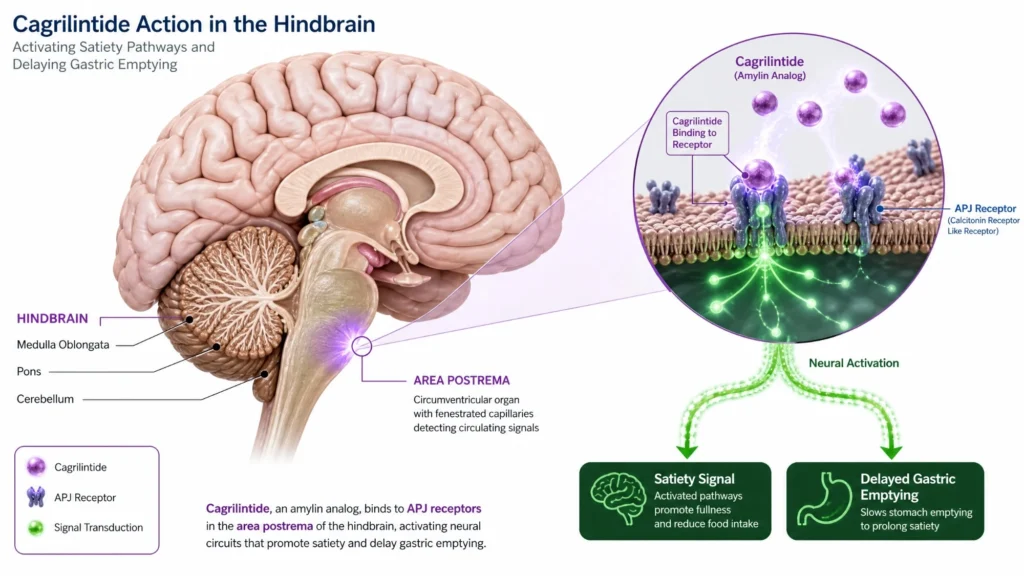
The primary mechanism underlying Cagrilintide’s action involves the activation of Amylin Receptors in the area postrema of the brain. This activation triggers a cascade of signals that result in a profound sensation of fullness and a reduction in caloric intake.
Upon introduction into a research model, Cagrilintide appears to:
- Induce Satiety: It acts directly on the central nervous system to decrease food intake by mimicking the natural “stop eating” signals sent after a meal.
- Delay Gastric Emptying: It slows the rate at which food leaves the stomach, which leads to a more gradual absorption of glucose into the bloodstream.
- Inhibit Glucagon Secretion: By suppressing postprandial glucagon, Cagrilintide helps maintain more stable blood glucose levels without the risk of hypoglycemia. (2)
- Synergize with GLP-1: Research shows that when Cagrilintide is studied alongside GLP-1 receptor agonists (such as Semaglutide), the combined effect on weight reduction is significantly greater than either agent used in isolation. (3)
How was Cagrilintide developed in research?
Cagrilintide was developed through the modification of the native amylin sequence to solve the issue of rapid degradation. Native amylin has a very short half-life, typically measured in minutes. By incorporating a fatty acid side chain (acylation), researchers created a molecule that can bind to albumin in the bloodstream.
This structural modification extends the peptide’s duration of action to approximately one week. This breakthrough allowed scientists to move away from the frequent dosing required by earlier amylin analogues (like Pramlintide) and explore the long-term metabolic shifts associated with sustained amylin receptor agonism. (4)
Research Studies on Cagrilintide Peptide
Cagrilintide and Dose-Dependent Weight Loss
The efficacy of Cagrilintide was investigated in a Phase 2 clinical research model involving overweight participants. Results showed a clear dose-dependent reduction in body weight. At the highest research doses, subjects experienced a significant percentage of weight loss compared to the placebo group over a 26-week period. Researchers noted that the weight loss was primarily due to a reduction in adipose tissue mass rather than lean muscle. (5)
Cagrilintide and the “CagriSema” Synergy
This study aimed to investigate the synergistic effects of combining Cagrilintide with Semaglutide. The results were landmark: the dual-hormone approach (targeting both the GLP-1 and Amylin pathways) produced weight loss results that exceeded the benchmarks of traditional monotherapies. Mechanistically, this is believed to occur because the two peptides target different regions of the brain involved in appetite regulation, effectively “double-teaming” the body’s metabolic control centers. (6)
Synopsis
The Cagrilintide peptide appears to be a highly potent modulator of the amylin signaling pathway. By providing a long-acting alternative to natural satiety hormones, it offers a specialized tool for studying the complexities of energy balance and obesity reversal. Its success in combination therapy suggests that the future of metabolic research may lie in the strategic integration of multiple hormonal pathways to achieve optimal tissue homeostasis.
NOTE: These products are intended for laboratory research use only. This peptide is not intended for personal use. Please review and adhere to our Terms and Conditions before ordering.
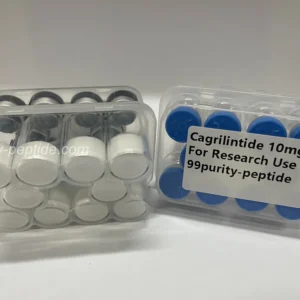
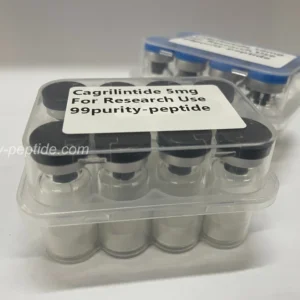
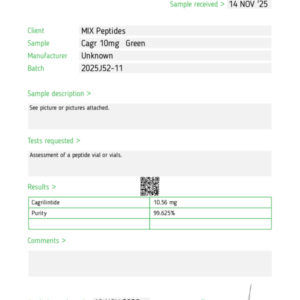
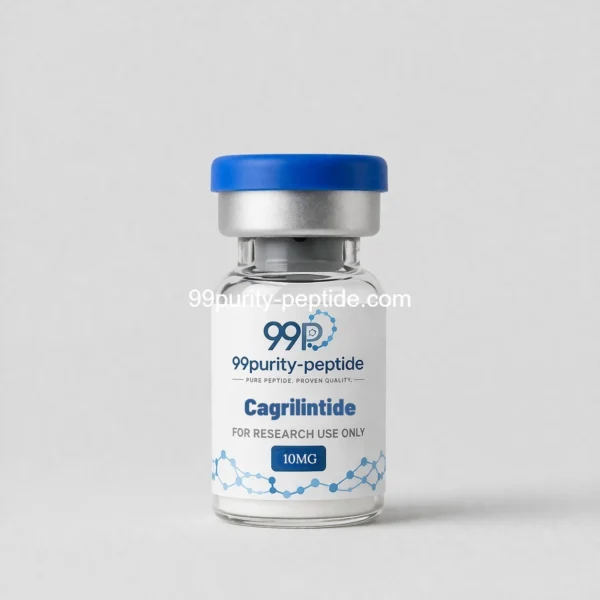
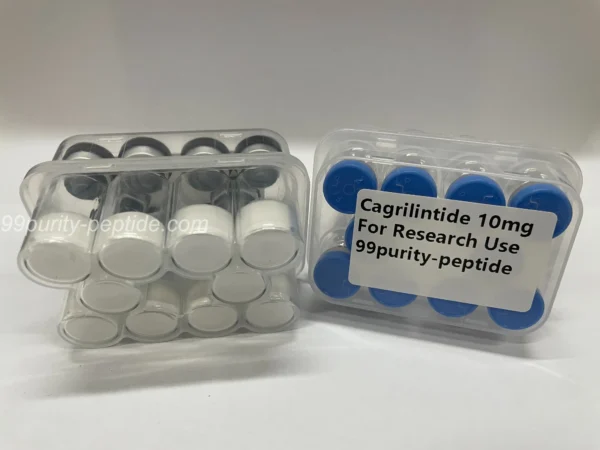
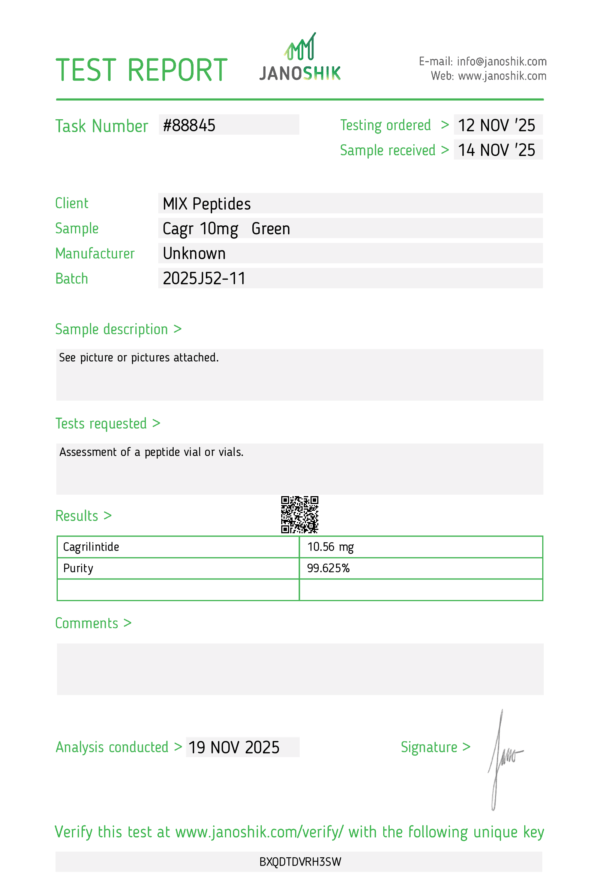
Cagrilintide 10mg – Specialized Analytical Standard for Incretin Research
Advanced Cagrilintide 10mg peptide. Verified by HPLC/MS analysis for professional research into appetite regulation and weight studies.