

May 11, 2026
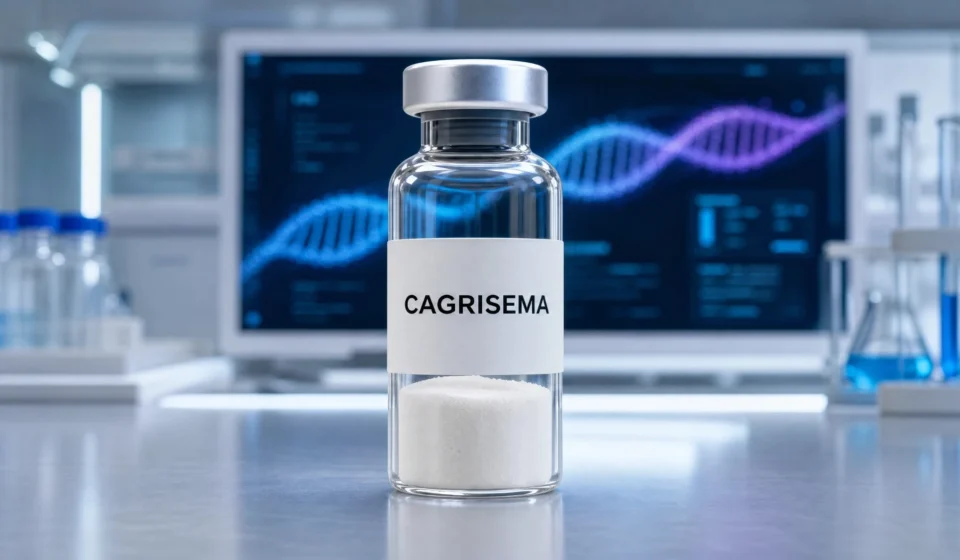
CagriSema is a fixed-dose combination research compound consisting of two potent long-acting peptides: Cagrilintide and Semaglutide. Research indicates that CagriSema represents a breakthrough in multi-modal metabolic therapy, aiming to achieve weight reduction and glycemic control that surpasses the efficacy of either component used as a monotherapy. By targeting both the incretin system (via Semaglutide) and the satiety signals of the hindbrain (via Cagrilintide), this combination is designed to attack metabolic dysfunction from two distinct physiological angles. (1)
Preclinical and Phase 2 clinical trials have positioned CagriSema as a “next-generation” weight loss agent, demonstrating a potential for body weight reduction exceeding 15% in just 32 weeks, even in research models with established Type 2 Diabetes.
What is the mechanism by which CagriSema exerts its effects?
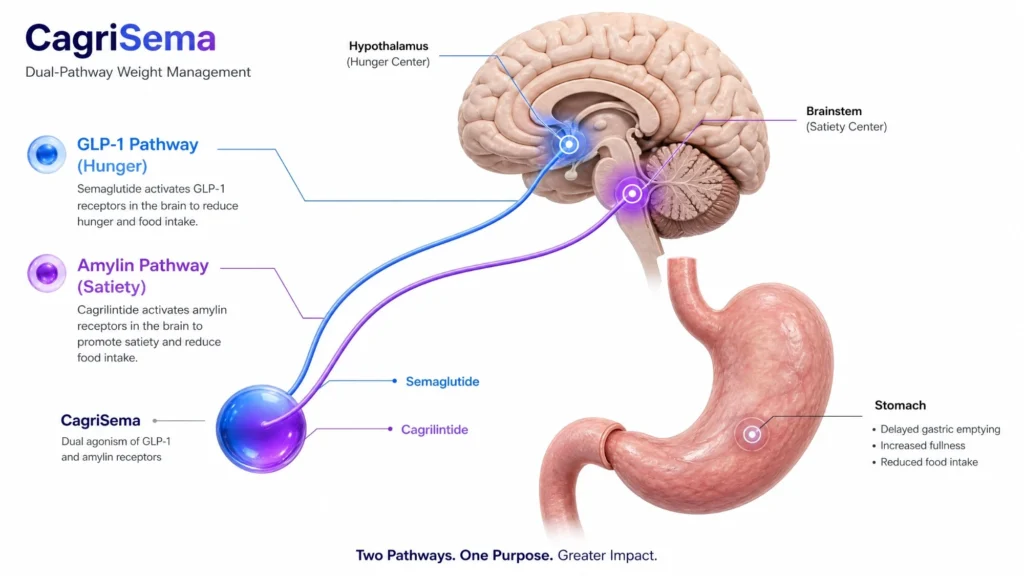
The primary mechanism of CagriSema lies in its Dual-Agonism. It capitalizes on the biological synergy between the Glucagon-like Peptide-1 (GLP-1) receptor and the Amylin receptor pathways.
Upon introduction into a research model, CagriSema appears to:
- Dual Appetite Suppression: Semaglutide acts on the hypothalamus to reduce hunger, while Cagrilintide acts on the area postrema to induce a feeling of fullness (satiety).
- Enhanced Glycemic Control: Semaglutide stimulates glucose-dependent insulin secretion, while Cagrilintide suppresses glucagon and slows gastric emptying, leading to superior blood sugar stabilization. (2)
- Metabolic Rate Maintenance: There is evidence suggesting that the combination may help mitigate the drop in metabolic rate that typically accompanies rapid weight loss, allowing for a more sustainable energy balance.
- Complementary Gastric Modulation: By slowing gastric emptying through two different hormonal signals, CagriSema ensures a prolonged period of post-prandial satisfaction. (3)
Why combine Cagrilintide and Semaglutide?
The development of CagriSema was driven by the observation that weight loss often plateaus when only a single hormonal pathway is targeted. Semaglutide (a GLP-1 agonist) is highly effective at reducing food intake, but the body eventually adapts.
Researchers hypothesized that by adding an amylin analogue (Cagrilintide), they could bypass this plateau. While GLP-1 handles “hunger,” Amylin handles “fullness.” This combined signal provides a more robust message to the brain to stop eating and utilize stored energy. Clinical research has shown that this “co-administration” does not merely add the effects of the two drugs together but actually multiplies them, creating a synergistic rather than an additive result. (4)
Research Studies on CagriSema
The Phase 2 “CagriSema vs. Monotherapy” Trial
This study aimed to investigate the superiority of the combination over its individual parts. In research subjects with Type 2 Diabetes, those treated with CagriSema achieved a mean weight loss of 15.6%, compared to 5.1% for Semaglutide alone and 8.1% for Cagrilintide alone. Researchers concluded that the combination significantly improved metabolic outcomes without a proportional increase in safety concerns. (5)
CagriSema and Cardiovascular Risk Factors
A secondary study focused on the impact of CagriSema on systemic health markers. Results indicated significant improvements in systolic blood pressure, fasting lipid profiles, and HbA1c levels. Mechanistically, the rapid reduction in visceral fat achieved by CagriSema is believed to decrease systemic inflammation, thereby protecting the cardiovascular system in high-risk research models. (6)
Synopsis
CagriSema represents the pinnacle of current metabolic research, shifting the focus from single-pathway treatments to integrated hormonal strategies. By harmonizing the GLP-1 and Amylin pathways, CagriSema provides a powerful tool for investigating the reversal of chronic obesity and metabolic syndrome. Its unprecedented efficacy in early trials warrants further long-term investigation into its impact on lean mass preservation and overall metabolic flexibility.
NOTE: These products are intended for laboratory research use only. This peptide combination is not intended for personal use. Please review and adhere to our Terms and Conditions before ordering.