

May 13, 2026
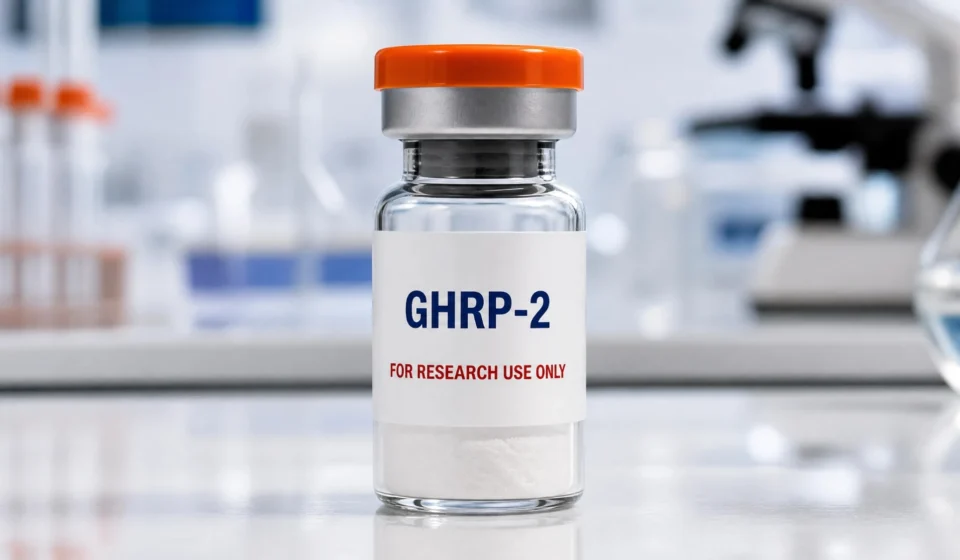
GHRP-2 (Growth Hormone Releasing Peptide-2), also known as Pralmorelin, is a synthetic hexapeptide that research indicates is a potent growth hormone secretagogue. As a second-generation GHRP, it is believed to act as a selective agonist of the ghrelin receptor (growth hormone secretagogue receptor, GHS-R). Extensive preclinical studies utilizing animal models have indicated the potential efficacy of GHRP-2 in stimulating the release of endogenous growth hormone (GH) from the anterior pituitary gland. These studies have suggested that the peptide may influence various physiological processes, including muscle tissue maintenance, lipid metabolism, and neuroprotection.(1)
What is the mechanism by which GHRP-2 exerts its effects?
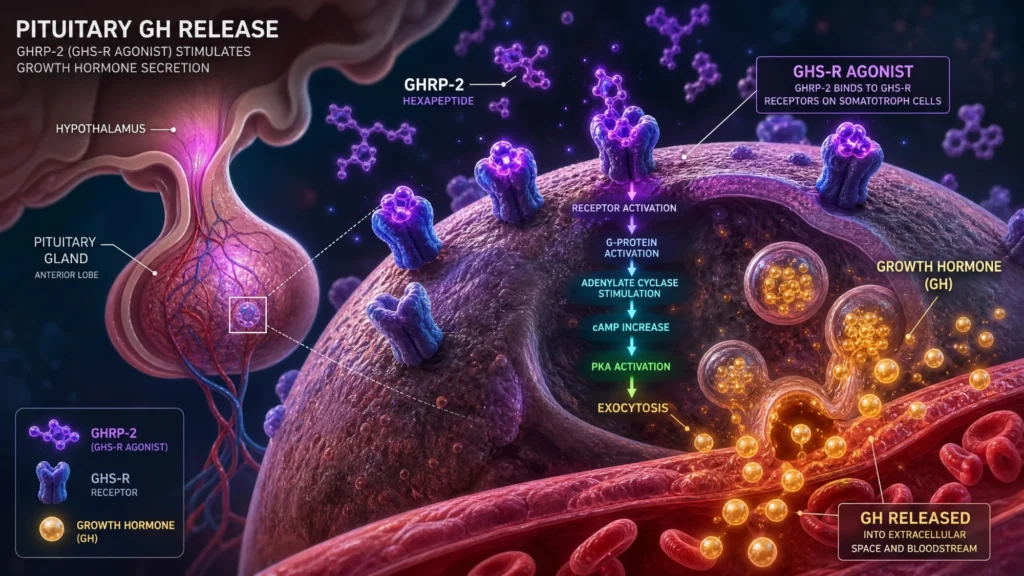
The mechanism underlying GHRP-2’s proposed biological action involves its potential to interact with G-protein coupled receptors located in the pituitary gland and the hypothalamus. Upon presentation, GHRP-2 appears to bind to the GHS-R, potentially triggering a cascade of intracellular signaling. This interaction appears to cause an increase in intracellular calcium levels via the inositol triphosphate (IP3) pathway, which is considered crucial for the pulsatile release of growth hormone.
Recent investigations suggest that GHRP-2 also acts by potentially antagonizing the effects of somatostatin, a hormone that naturally inhibits GH release. Studies also suggest the potential involvement of GHRP-2 in appetite regulation and energy homeostasis through its ghrelin-mimetic properties. Furthermore, analysis indicated that GHRP-2 may penetrate the blood-brain barrier to a limited extent, potentially interacting with hypothalamic neurons to regulate growth signals and metabolic rate in research models.(1) (2)
How was the GHRP-2 peptide discovered?
The discovery of GHRP-2 stemmed from the early work of Dr. Cyril Bowers and his research team, who sought to develop synthetic compounds capable of stimulating growth hormone release without the need for Growth Hormone-Releasing Hormone (GHRH). In their investigations, the team utilized a “reverse pharmacology” approach, starting with synthetic opioid-like peptides that lacked opioid activity but demonstrated GH-releasing properties.
Building upon these findings, researchers refined the molecular structure to improve potency and selectivity, leading to the development of GHRP-2. Unlike its predecessor GHRP-6, GHRP-2 appeared to target the GH receptor with greater specificity and fewer side effects related to prolactin or cortisol elevation in certain models. This discovery allowed researchers to target the specific protein-protein interactions necessary for endocrine optimization and the study of pituitary disorders in laboratory settings.(3)
Research Studies on GHRP-2 Peptide
GHRP-2 Peptide and Pituitary GH Secretion
The role of GHRP-2 in endocrine signaling was investigated to elucidate its potential to reverse growth hormone deficiencies in aging or stressed models. Using rodent subjects, the impact of GHRP-2 was evaluated on pulsatile GH levels and the underlying molecular mechanisms. This study suggested that GHRP-2 may significantly increase GH concentration compared to findings yielded by the control group. Histological analyses revealed that upon GHRP-2 introduction, it may potentially yield improved somatotroph activity and probably result in enhanced systemic IGF-1 levels. Mechanistically, GHRP-2 appears to activate the ghrelin receptor pathway, potentially promoting sustained anabolic signaling.(4)
GHRP-2 Peptide and Neuro-metabolic Homeostasis
This study aimed to investigate the role of GHRP-2 as a modulator of appetite and energy expenditure. Results indicate that GHRP-2 potentially interacts with the arcuate nucleus of the hypothalamus, resulting in potential positive regulation of food intake signals in malnourished models. In vitro experiments using hypothalamic cell cultures suggest that the peptide may play a role in neuronal survival, as indicated by potential differential regulation of apoptotic markers. Research further suggests that in damaged tissue models, the combined influence of GHRP-2 and proper nutrient availability may synergistically accelerate the recovery process. Researchers state that “GHRP-2, as a potent secretagogue, disrupted the decline of metabolic signaling and activated intrinsic growth pathways in vitro.”(5)
Synopsis
The GHRP-2 peptide appears to be a promising modulator of the growth hormone and ghrelin signaling pathways. By disrupting the inhibitory effects of somatostatin and activating the GHS-R, GHRP-2 appears to stimulate the endogenous release of GH, potentially leading to enhanced cellular responses and improved metabolic markers in research models. Studies have suggested its potential in treating muscle wasting and exploring neuroendocrine regulation. Further investigations are warranted to fully elucidate its underlying mechanisms and evaluate its applications in scientific research.
NOTE: These products are intended for laboratory research use only. This peptide is not intended for personal use. Please review and adhere to our Terms and Conditions before ordering.