

May 13, 2026
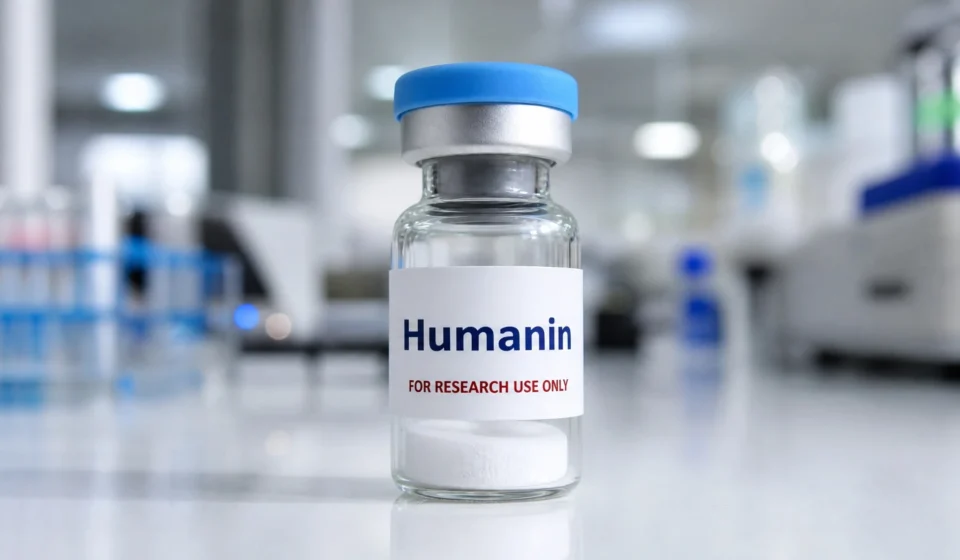
Humanin is a naturally occurring 24-amino acid peptide that research indicates is a primary member of the mitochondrial-derived peptide (MDP) family. It was originally identified in the search for survival factors in the brains of subjects resistant to neurodegeneration. Humanin is encoded within the mitochondrial 16S ribosomal RNA gene, representing a unique bridge between mitochondrial genetics and cellular signaling. Extensive preclinical studies utilizing animal models have indicated the potential efficacy of Humanin in protecting cells against a variety of insults, including oxidative stress, hypoxia, and glucose deprivation.(1)
What is the mechanism by which Humanin exerts its effects?
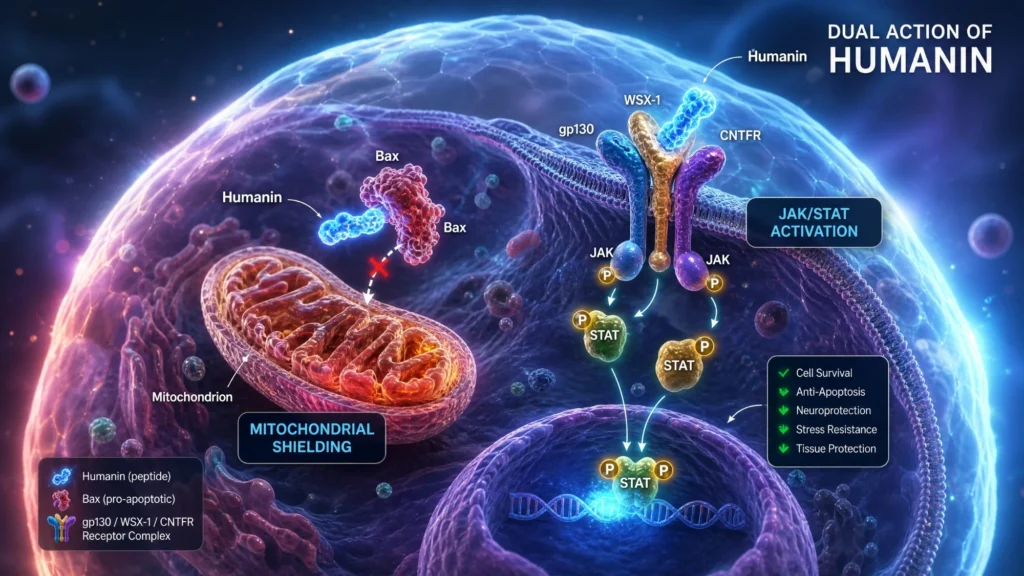
The mechanism underlying Humanin’s proposed cytoprotective action appears to involve both intracellular and extracellular signaling pathways. Intracellularly, Humanin appears to bind to pro-apoptotic proteins such as Bax. This interaction appears to cause the inhibition of Bax translocation to the mitochondria, which is considered crucial for preventing mitochondrial outer membrane permeabilization and the subsequent release of cytochrome c.
Extracellularly, Humanin is believed to act as a ligand for a specific trimeric surface receptor complex consisting of CNTFR, WSX-1, and gp130. Studies suggest the potential involvement of this receptor binding in the activation of the JAK2/STAT3 and ERK1/2 signaling cascades. These pathways are considered key contributors to cellular survival and the modulation of inflammatory responses. Furthermore, Humanin may also interact with the formyl peptide receptor-like 1 (FPRL1), potentially influencing immune cell chemotaxis and systemic metabolic regulation in research models.(1) (2)
How was the Humanin peptide discovered?
The discovery of Humanin occurred in 2001 by a team of researchers led by Dr. Ikuo Nishimoto at Keio University. In their investigations, the team utilized a functional expression screening strategy to identify genes that could rescue neuronal cells from death induced by various neurotoxic proteins.
Building upon these findings, they isolated a 24-amino acid sequence that demonstrated remarkable survival-promoting activity. They named the peptide “Humanin” to reflect its potential for preserving human cellular life. This discovery was groundbreaking as it revealed that the mitochondrial genome, previously thought to be strictly limited to energy production and basic machinery, could encode a secreted signaling factor that protects the entire cell from programmed death. This allowed researchers to target the specific protein-protein interactions necessary for mitochondrial-nuclear communication.(3)
Research Studies on Humanin
Humanin and Neuro-Regenerative Resilience
The role of Humanin in neural preservation was investigated to elucidate its potential to mitigate the effects of toxic protein accumulation. Using rodent models of neurotoxicity, the impact of Humanin was evaluated on synaptic density and memory retention. This study suggested that Humanin may significantly reduce the rate of neuronal apoptosis compared to findings yielded by the control group. Histological analyses revealed that upon Humanin introduction, it may potentially yield improved dendritic spine stability and probably result in reduced neuro-inflammation. Mechanistically, Humanin appears to stabilize the mitochondrial membrane, potentially promoting long-term cognitive health in research settings.(4)
Humanin and Metabolic Cytoprotection
This study aimed to investigate the role of Humanin as a modulator of insulin sensitivity and cardiovascular health. Results indicate that Humanin potentially interacts with metabolic pathways to improve glucose utilization in stressed models. In vitro experiments using endothelial cell cultures suggest that the peptide may play a role in preventing atherosclerotic changes, as indicated by potential differential regulation of nitric oxide production and reduced oxidative damage. Research further suggests that in aging models, the influence of Humanin may synergistically protect the pancreas from beta-cell exhaustion. Researchers state that “Humanin, as a mitochondrial-derived survival factor, disrupted the progression of metabolic dysfunction and activated intrinsic cellular defense pathways in vitro.”(5)
Synopsis
The Humanin peptide appears to be a promising modulator of mitochondrial signaling and cellular survival pathways. By disrupting the pro-apoptotic activity of Bax and activating the JAK/STAT protective cascade, Humanin appears to stimulate the body’s innate resilience mechanisms, potentially leading to enhanced cellular responses and improved tissue longevity in research models. Studies have suggested its potential in treating cardiovascular decline and exploring the molecular biology of “super-aging.” Further investigations are warranted to fully elucidate its underlying mechanisms and evaluate its applications in scientific research.
NOTE: These products are intended for laboratory research use only. This peptide is not intended for personal use. Please review and adhere to our Terms and Conditions before ordering.
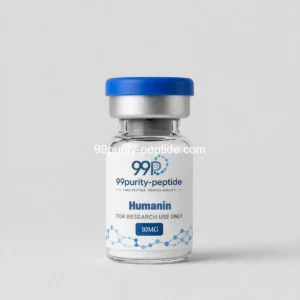
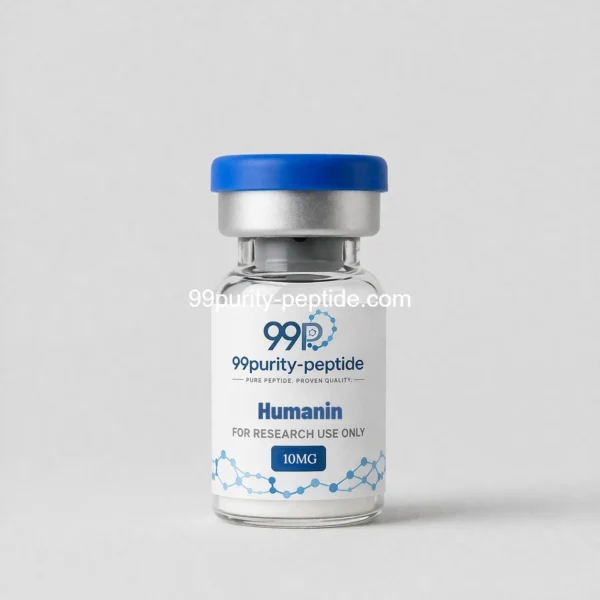
Humanin 10mg – Mitochondrial Health & Neuro-Protection Research
A mitochondrial-derived peptide (MDP). Specialized for research into mitochondrial survival signaling, cytoprotection, and the prevention of metabolic-related cellular decline.