
Skip to content
-
Subscribe to our newsletter & never miss our best posts. Subscribe Now!
99% Purity Peptide 99% Purity Peptide 99% Purity Peptide
  • Home
  • Shop
  • Features
  • Terms and conditions
  • Pages
  • Home
  • Shop
  • Features
  • Terms and conditions
  • Pages
Close

Search

Trending Now:
Retatrutide Tirzepatide Nad+ MOTS-c Liraglutide HGH IGF-1 LR3 GHK-Cu DSIP Bronchogen Kisspeptin-10
  • Weight Loss & Metabolic
  • Longevity & Anti-Aging
  • Aesthetics & Performance
  • Neuroscience & Nootropics
Subscribe
My account
99% Purity Peptide 99% Purity Peptide 99% Purity Peptide
  • Home
  • Shop
  • Features
  • Terms and conditions
  • Pages
  • Home
  • Shop
  • Features
  • Terms and conditions
  • Pages
Close

Search

Trending Now:
Retatrutide Tirzepatide Nad+ MOTS-c Liraglutide HGH IGF-1 LR3 GHK-Cu DSIP Bronchogen Kisspeptin-10
  • Weight Loss & Metabolic
  • Longevity & Anti-Aging
  • Aesthetics & Performance
  • Neuroscience & Nootropics
Subscribe
My account
Home/Longevity & Anti-Aging/Cardiogen Peptide: Research in Myocardial Protection and Cardiomyocyte Regeneration
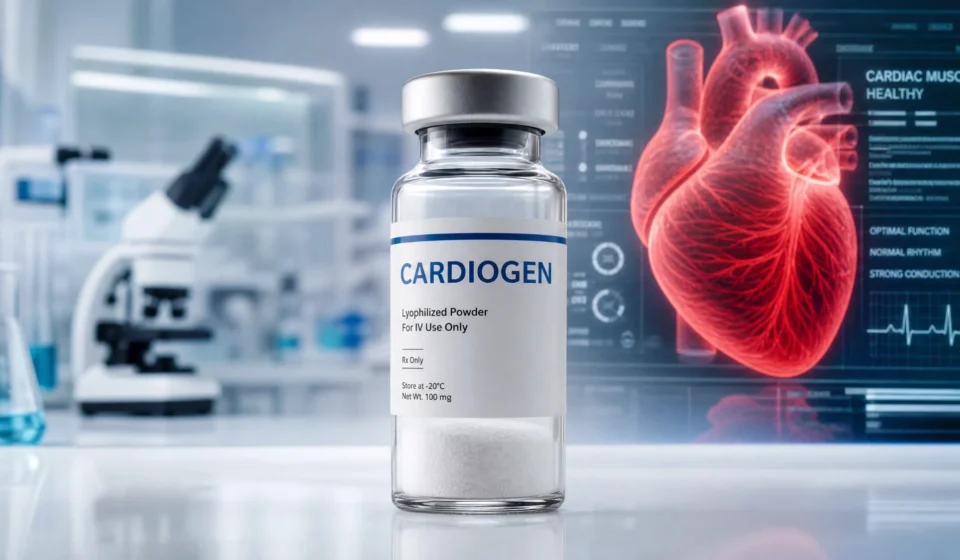
cardiogen_vial
Longevity & Anti-Aging

Cardiogen Peptide: Research in Myocardial Protection and Cardiomyocyte Regeneration

By gruppo di ricerca
October 1, 2025 3 Min Read
0

May 11, 2026

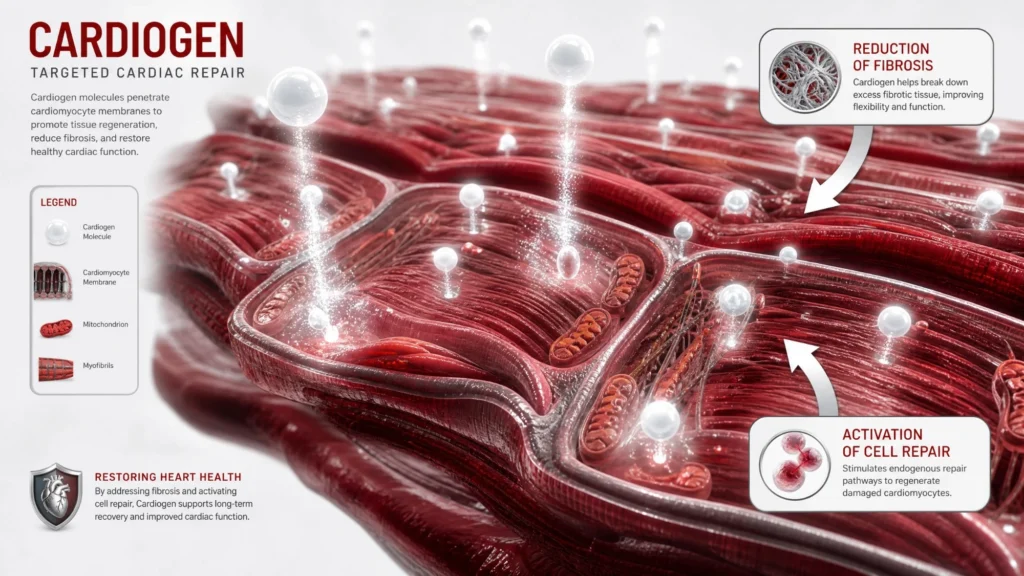
Cardiogen (Ala-Glu-Asp-Arg) is a synthetic tetrapeptide classified as a bioregulator, specifically engineered to target the cellular tissues of the cardiovascular system. Research indicates that Cardiogen acts as a potent signaling molecule that modulates gene expression within heart muscle cells (cardiomyocytes). Developed under the principles of organ-specific peptide regulation, Cardiogen is investigated for its potential to stimulate repair mechanisms in the heart and reduce the formation of non-functional scar tissue following myocardial injury. (1)

Preclinical studies suggest that Cardiogen may play a vital role in maintaining heart health by promoting the structural integrity of the myocardium and optimizing the metabolic processes within cardiac cells, particularly in research models of heart failure or ischemia.


What is the mechanism by which Cardiogen exerts its effects?

The primary mechanism underlying Cardiogen’s action involves the epigenetic regulation of protein synthesis within the heart. By interacting with the DNA structure of cardiomyocytes and fibroblasts, Cardiogen is believed to restore the functional activity of genes that have been silenced by aging or disease.

Upon introduction into a research model, Cardiogen appears to:

  1. Inhibit Fibrosis: It appears to reduce the proliferation of myofibroblasts, which are responsible for creating stiff, fibrous scar tissue in the heart. By limiting fibrosis, it helps maintain the elasticity and pumping efficiency of the myocardium. (2)
  2. Stimulate Cardiomyocyte Proliferation: Research suggests that Cardiogen may trigger the “reawakening” of cell division pathways in heart muscle, potentially leading to the formation of new, functional cardiac cells.
  3. Modulate p53 Expression: It has been observed to regulate the p53 protein, which is a key marker of cellular aging and apoptosis (programmed cell death). By normalizing p53 levels, Cardiogen may extend the lifespan and resilience of cardiac cells. (3)
  4. Enhance Mitochondrial Function: It appears to optimize cellular respiration within the heart, ensuring that cardiomyocytes have the ATP (energy) required for consistent contraction and relaxation.
cardiogen_muscle_diagram

How was Cardiogen discovered in research?

Cardiogen was developed at the St. Petersburg Institute of Biogerontology as part of a mission to identify short-chain peptides that govern organ-specific longevity. Researchers observed that young, healthy cardiac tissue contains high concentrations of specific regulatory peptides that decline with age.

By isolating the active tetrapeptide sequence (Ala-Glu-Asp-Arg) from bovine cardiac tissue and creating a synthetic version, scientists produced a highly stable and bioavailable research agent. This allowed for focused investigation into how specific peptide signals can “reset” the biological age of heart tissue and counteract the degenerative changes associated with cardiovascular decline. (4)


Research Studies on Cardiogen Peptide

Cardiogen and Post-Infarction Recovery

The role of Cardiogen in recovering from myocardial infarction (heart attack) was investigated in research models. Results indicated that administration of the peptide led to a significantly smaller “infarct zone” (area of dead tissue) compared to control groups. Researchers noted that the heart walls remained thicker and stronger, suggesting that Cardiogen successfully promoted repair while preventing the dangerous thinning of the heart muscle. (5)

Anticarcinogenic and Pro-Apoptotic Regulation

Interestingly, research has also explored Cardiogen’s impact on cancer cells within cardiac tissue. This study aimed to investigate how Cardiogen influences apoptosis in tumor cells. Results suggested that while Cardiogen protects healthy heart cells, it may actually promote the death of malignant cells by modulating specific apoptotic markers. This “selective” action makes Cardiogen a subject of significant interest in the study of cardio-oncology. (6)


Synopsis

The Cardiogen peptide appears to be a highly specific and potent bioregulator of the cardiovascular system. By targeting the fundamental genetic pathways of myocardial repair and suppressing the growth of fibrous scar tissue, Cardiogen potentially offers a unique route for studying the reversal of heart damage and the optimization of cardiac longevity. Further investigations are warranted to fully understand its synergistic effects when paired with other metabolic or longevity peptides in scientific research.


NOTE: These products are intended for laboratory research use only. This peptide is not intended for personal use. Please review and adhere to our Terms and Conditions before ordering.
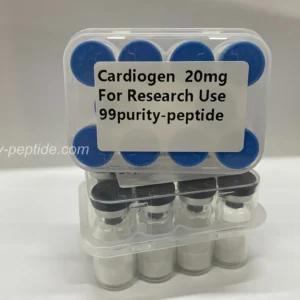
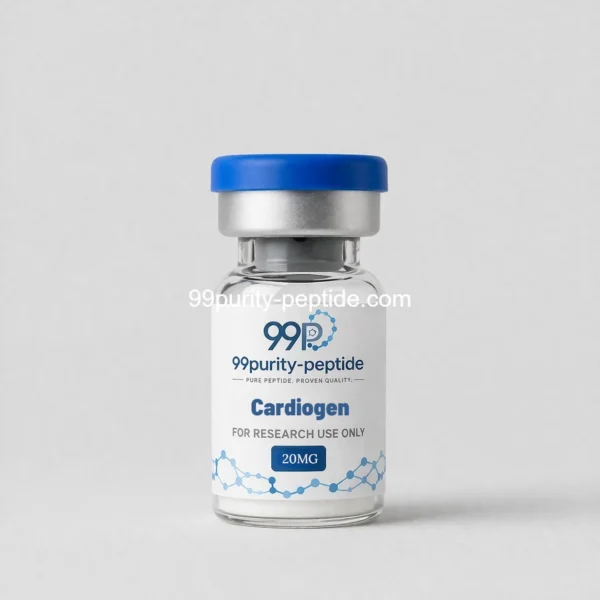
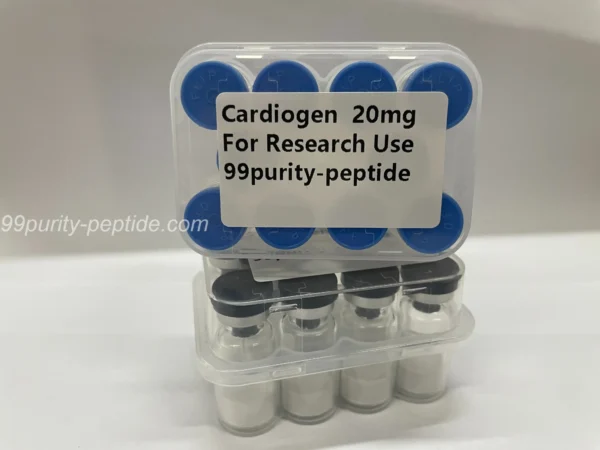
Cardiogen(20mg) peptide vial for cardiovascular repair and heart recovery research.
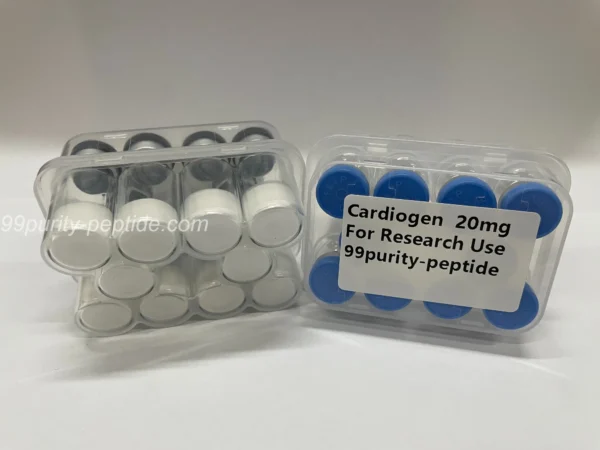
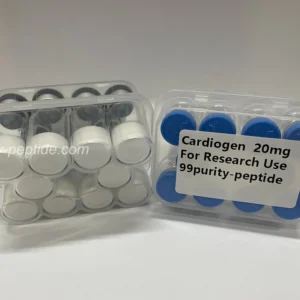
Macro shot of Cardiogen(20mg) lyophilized powder showing high-purity laboratory grade.
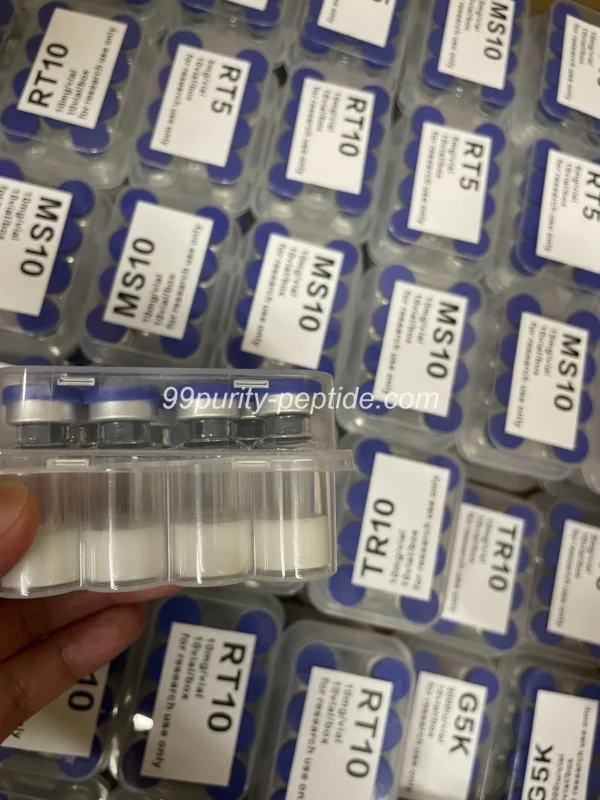
Handheld Cardiogen 20mg vial in 99Purity-Peptide warehouse for repair research stock.
  • Cardiogen(20mg) peptide vial for cardiovascular repair and heart recovery research.
  • Macro shot of Cardiogen(20mg) lyophilized powder showing high-purity laboratory grade.
  • Macro shot of Cardiogen(20mg) lyophilized powder showing high-purity laboratory grade.
  • Handheld Cardiogen 20mg vial in 99Purity-Peptide warehouse for repair research stock.
Cardiogen(20mg) peptide vial for cardiovascular repair and heart recovery research.Macro shot of Cardiogen(20mg) lyophilized powder showing high-purity laboratory grade.Macro shot of Cardiogen(20mg) lyophilized powder showing high-purity laboratory grade.Handheld Cardiogen 20mg vial in 99Purity-Peptide warehouse for repair research stock.

Cardiogen 20mg – Cardiomyocyte Function & Cellular Homeostasis Research

£105.78

Optimized for cardiovascular system studies. Cardiogen is engineered for research into heart muscle repair, endothelial health, and post-stress cardiac recovery signaling.


Clear
SKU: REP-CAR-615
分类: Repair
标签:Bioregulator Peptides, Tissue Organ Repair

Tags:

BioregulatorCardiogenCardiovascular ResearchHeart HealthMyocardial Repair
Author

gruppo di ricerca

Follow Me
Other Articles
cerebrolysin_vial
Previous

Cerebrolysin: Research in Neurotrophic Support and Synaptic Plasticity

cagrisema_vial
Next

CagriSema: Research in the Synergistic Agonism of GLP-1 and Amylin Pathways

No Comment! Be the first one.

    Leave a Reply Cancel reply

    Your email address will not be published. Required fields are marked *

    Recent Posts

    • Adamax Peptide: Research in Neuroprotection and Cognitive Augmentation
    • Adipotide (FTTP) Peptide: Research in Targeted Adipose Tissue Vasculature
    • AICAR Peptide: Research in Metabolic Activation and Cellular Energy Homeostasis
    • ARA-290 Peptide: Research in Innate Repair and Neuropathic Protection
    • AOD9604 Peptide: Research in Lipolysis and Cartilage Regeneration

    Recent Comments

    No comments to show.

    Archives

    • October 2025
    • September 2025

    Categories

    • Aesthetics & Performance
    • Healing & Tissue Repair
    • Longevity & Anti-Aging
    • Neuroscience & Nootropics
    • Weight Loss & Metabolic

    Categories

    • Cosmetic (8)
    • Growth (19)
    • Metabolic (22)
    • Neuro (11)
    • Repair (15)
    • Support (2)
    • Systemic (8)
    Hi, I'm Alex. I work in API development research and have in-depth knowledge of the medical, peptide, and health fields.
    • X
    • Instagram
    • Facebook
    • YouTube
    Work Experience

    Shenzhen Research Institute

    Peptide development

    2021-present

    Luxora Digital

    API

    2019-2021

    Southern Medical University

    Support Specialist

    2017-2019

    Available for Hire
    Get In Touch

    Recent Posts

    • adamax_visualization
      Adamax Peptide: Research in Neuroprotection and Cognitive Augmentation
      by gruppo di ricerca
      October 1, 2025
    • hmg_vial.
      HMG: Research in Dual Gonadotropin Signaling and Fertility Models
      by gruppo di ricerca
      September 30, 2025
    • hgh_vial
      HGH: Research in Growth Signaling and Cellular Regeneration
      by gruppo di ricerca
      September 30, 2025
    • hexarelin_vial
      Hexarelin Acetate: Research in GH Secretion and Cardioprotection
      by gruppo di ricerca
      October 1, 2025

    search...

    Information

    • About Me
    • My story
    • Awards & Achievement
    • Contact

    Welcome to the ultimate source for fresh perspectives! Explore curated content to enlighten, entertain and engage global readers.

    • Facebook
    • X
    • Instagram
    • LinkedIn

    Discover

    • Weight Loss & Metabolic
    • Longevity & Anti-Aging
    • Aesthetics & Performance
    • Neuroscience & Nootropics

    Latest Posts

    • Tirzepatide Peptide: A Dual-Agonist Approach to Metabolic Research and Weight Regulation
      Tirzepatide is a novel, synthetic peptide that research indicates is… Read more: Tirzepatide Peptide: A Dual-Agonist Approach to Metabolic Research and Weight Regulation
    • Retatrutide Peptide: Research in Triple-Agonist Metabolic Regulation
      May 8, 2026 Retatrutide (also known as LY3437943) is an… Read more: Retatrutide Peptide: Research in Triple-Agonist Metabolic Regulation
    • Ipamorelin Peptide: Research in Selective Growth Hormone Stimulation
      May 13, 2026 Ipamorelin is a synthetic pentapeptide ($Aib-His-D-2-Nal-D-Phe-Lys-NH_2$) that… Read more: Ipamorelin Peptide: Research in Selective Growth Hormone Stimulation

    Locate Us

    123 Demo Blvd, Miami, FL 4567, United States
    danielkimeuuk@gmail.com

    Pages

    • BPC-157 Peptide 10mg – Angiogenesis & Gastric Mucosal Integrity Research
    • SS-31 Peptide (Elamipretide) 50mg – Mitochondrial Cardiolipin Stabilization Research
    • HGH (Human Growth Hormone) 36iu – Somatotropic Signaling & Proteostasis Research
    • Tirzepatide 20mg – GIP & GLP-1 Receptor Dual Agonism Research
    • Retatrutide 60mg – High-Purity GIP & GLP-1 Dual Agonist for Metabolic Modeling

    Contact

    Phone

    +44 7591 782646

    Email

    danielkimeuuk@gmail.com

    Location

    Shenzhen University Longhua Bio-industry Innovation Research Institute Base

    Copyright 2026 — 99% Purity Peptide. We are a peptide chemical supplier. Statements on this site have not been evaluated by the FDA. Our products are not for human/animal use and are not intended to diagnose, treat, cure, or prevent any disease. Laboratory/In-Vitro Research Use Only.