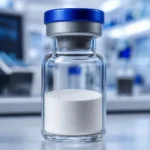


Cortagen Peptide: Research in Neuro-Epigenetic Regulation and Synaptic Stability

May 11, 2026
Cortagen (Ala-Glu-Asp-Pro) is a synthetic tetrapeptide bioregulator specifically designed to target the structural and functional restoration of the central and peripheral nervous systems. Research indicates that Cortagen acts as a potent signaling molecule that modulates gene expression within neurons and glial cells. Developed by the St. Petersburg Institute of Biogerontology, it belongs to a class of short-chain peptides investigated for their ability to restore protein synthesis in organs compromised by aging, trauma, or environmental stress.
Preclinical studies suggest that Cortagen exerts a “corrective” effect on the functional activity of brain cells, making it a primary subject for research in neuroprotection, cognitive restoration, and the repair of nerve tissue. Its low molecular weight allows it to bypass the blood-brain barrier (BBB) more effectively than larger protein-based neurotrophic factors.
II. Chemical Properties and Physical Data
To ensure precision in laboratory research, the following chemical metadata defines the Cortagen peptide:
- Chemical Composition: L-Alanyl-L-glutamyl-L-aspartyl-L-proline
- Molecular Formula: $C_{17}H_{26}N_{4}O_{9}$
- Molecular Weight: 398.41 g/mol
- Synonyms: Ala-Glu-Asp-Pro, AEDP, Cortagen Tetrapeptide
- Other Known Names: Korten, Cortex Bioregulator, Neuro-cortical regulatory peptide
- Purity Standard: Laboratory grade typically requires $\ge 98\%$ (HPLC)
III. What is the mechanism by which Cortagen exerts its effects?
The primary mechanism underlying Cortagen’s action is epigenetic regulation. It is believed to interact directly with the DNA structure of nerve cells, specifically targeting segments that govern cellular repair, protein folding, and the inflammatory response.
Upon introduction into a research model, Cortagen appears to exhibit the following biological activities:
- Normalization of Protein Synthesis: It promotes the production of essential structural and functional proteins in the cerebral cortex, which often decline under conditions of chronic stress or pathological aging.
- Reduction of Neuroinflammation: Research suggests that Cortagen can lower the expression of pro-inflammatory cytokines (such as IL-1, IL-6, and TNF-alpha) within brain tissue, mitigating secondary damage caused by inflammatory cascades.
- Enhancement of Nerve Regeneration: It appears to stimulate the growth of neurites and support the survival of neurons, showing significant potential in the study of peripheral nerve repair after physical trauma.
- Balance of Neurotransmitter Activity: Evidence suggests it helps normalize the ratio of excitatory and inhibitory signals in the brain, contributing to overall synaptic stability and optimized information processing.

IV. How was Cortagen discovered in research?
Cortagen was developed through the isolation of regulatory peptides from the cerebral cortex of young, healthy animals. Researchers identified that the specific tetrapeptide sequence (Ala-Glu-Asp-Pro) was a key driver of neural homeostasis.
By creating a synthetic version of this sequence, scientists produced a highly stable and bioavailable research agent. Unlike larger, complex proteins or crude extracts, Cortagen’s small molecular size and high purity allow researchers to study the “resetting” of the biological age of neural tissues without the interference of non-specific proteins or metabolic impurities.
V. Representative Research Studies on Cortagen
1. Peripheral Nerve Repair and Myelination
The role of Cortagen in recovering from physical nerve trauma was investigated in research models of sciatic nerve injury. Results indicated that administration of the peptide led to a significantly faster restoration of motor function and nerve conduction velocity compared to control groups. Histological analysis suggested that Cortagen promoted the myelination of damaged nerve fibers, which is the essential physical process required for signal transmission.
2. Neuroprotection in Aging and Cognitive Decline
This study aimed to investigate Cortagen’s impact on age-related cognitive decline. In aged research models, Cortagen appeared to restore the electrical activity of cortical neurons to levels typically seen in much younger specimens. Mechanistically, this is attributed to its ability to prevent the accumulation of “biological noise”—the genetic expression errors that accumulate as cells age.
VI. Synopsis
The Cortagen peptide appears to be one of the most specific and potent bioregulators of the nervous system currently available for research. By targeting the fundamental genetic pathways of neural repair and suppressing neuroinflammation, Cortagen offers a unique route for studying the reversal of brain aging and the optimization of nerve regeneration. Further investigations are warranted to fully understand its synergistic potential when paired with other neurotrophic factors like Cerebrolysin or Pinealon.
NOTE: These products are intended for laboratory research use only. This peptide is not intended for personal use. Please review and adhere to our Terms and Conditions before ordering.

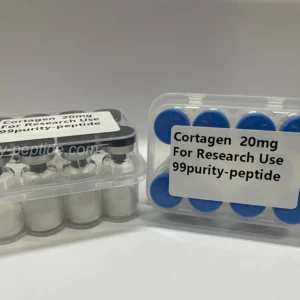
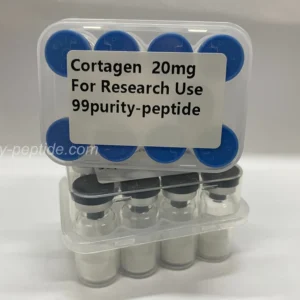

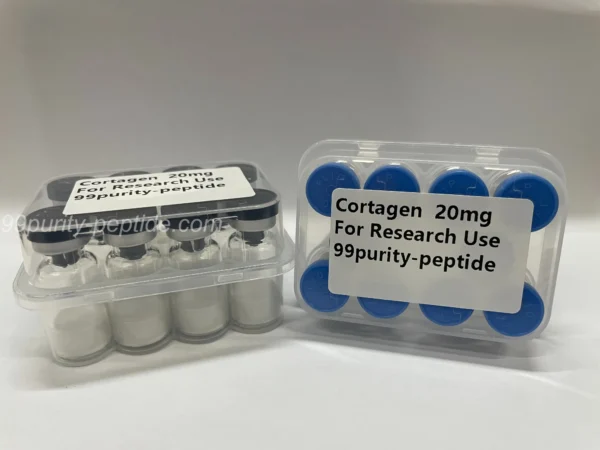
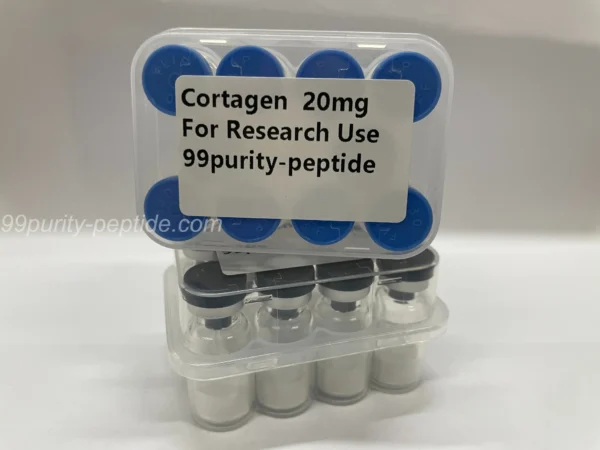
Cortagen 20mg – Neuronal Signaling & Brain Homeostasis Research
A bioregulator peptide focused on the central nervous system. Engineered for research into neuro-regeneration, CNS tissue repair, and cognitive-stress recovery.