



May 11, 2026
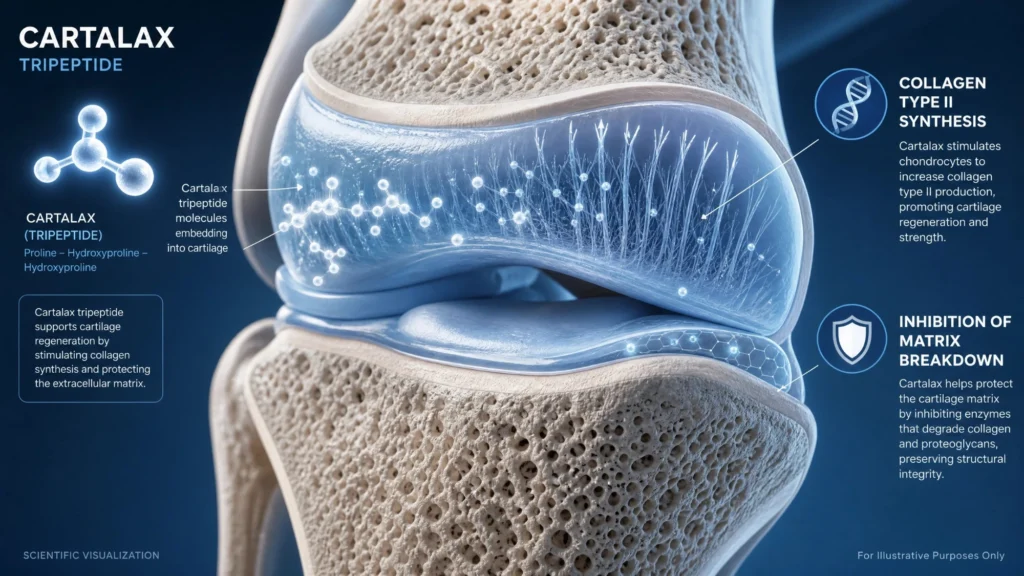
Cartalax (Ala-Glu-Asp) is a synthetic tripeptide classified as a “bioregulator.” Research indicates that Cartalax is specifically engineered to target the tissues of the musculoskeletal system, with a high degree of affinity for cartilage cells (chondrocytes) and connective tissues. Developed under the framework of organ-specific peptide regulation, Cartalax is investigated for its potential to normalize protein synthesis in joints and spines, particularly in research models of osteoarthritis and age-related cartilage degeneration.
Preclinical studies suggest that Cartalax acts as a fundamental signaling molecule that supports the structural integrity of the extracellular matrix in joints, making it a primary subject for research in longevity and physical performance recovery.
What is the mechanism by which Cartalax exerts its effects?
The primary mechanism underlying Cartalax’s action involves the epigenetic modulation of gene expression within chondrocytes. By interacting with specific DNA sequences in cartilage tissue, Cartalax is believed to promote the production of essential structural proteins that typically decline due to trauma or aging.
Upon introduction into a research model, Cartalax appears to:
- Stimulate Collagen and Proteoglycan Synthesis: It promotes the expression of Type II collagen and aggrecan, the two primary building blocks of healthy, resilient cartilage.
- Modulate Inflammatory Cytokines: Research suggests that Cartalax may reduce the activity of enzymes (like matrix metalloproteinases) that break down joint tissue during chronic inflammation.
- Restore Cellular Metabolism: It appears to optimize the metabolic processes of chondrocytes, ensuring they have the energy required to maintain and repair the surrounding matrix.
- Inhibit Cellular Senescence: By normalizing DNA methylation patterns, Cartalax may prevent cartilage cells from entering a “senescent” state, thereby preserving the regenerative capacity of the joint.
How was Cartalax discovered in research?
Cartalax was developed at the St. Petersburg Institute of Biogerontology as part of a long-term initiative to identify short-chain peptides that govern tissue-specific regeneration. Researchers analyzed the peptide sequences found in the cartilage of young, healthy organisms and identified the Ala-Glu-Asp sequence as a critical regulator of osteoarticular health.
By creating a synthetic version of this tripeptide, scientists developed a stable and bioavailable research agent that can bypass the digestive system’s degradation more effectively than larger protein molecules. This allowed for focused investigation into how micro-peptides can “reset” the biological age of connective tissues.
Research Studies on Cartalax Peptide
Cartalax and Osteoarthritis Progression
The role of Cartalax in mitigating degenerative joint disease was investigated in research models of induced osteoarthritis. Results indicated that administration of the peptide led to a significant preservation of cartilage thickness and a reduction in joint space narrowing. Histological analysis suggested that treated models exhibited a more organized and dense collagen matrix compared to untreated controls.
Synergy in Musculoskeletal Recovery
This study aimed to investigate the combined effects of Cartalax and other bioregulators (such as Pinealon or Sigumir). The results suggested a synergistic effect: while Cartalax focused on the restoration of cartilage tissue, the additional peptides supported the health of the underlying bone and neurological control of movement. This multi-peptide approach resulted in superior recovery of joint function in experimental models.
Synopsis
The Cartalax peptide appears to be a highly specific and potent bioregulator of the musculoskeletal system. By targeting the fundamental genetic pathways of cartilage repair and suppressing degenerative enzymes, Cartalax potentially offers a unique route for studying the reversal of joint wear and the optimization of osteoarticular longevity. Its simple structure and targeted action make it a primary candidate for future investigations into comprehensive tissue regeneration.
NOTE: These products are intended for laboratory research use only. This peptide is not intended for personal use. Please review and adhere to our Terms and Conditions before ordering.

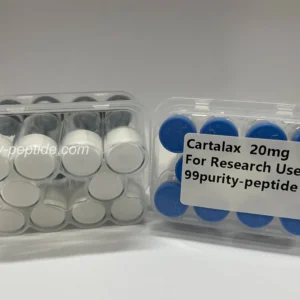




Cartalax 20mg – Chondrocyte Function & Cartilage Homeostasis Research
A bio-active peptide for musculoskeletal studies. Specialized for research into cartilage tissue regeneration, joint mobility optimization, and connective tissue repair.