
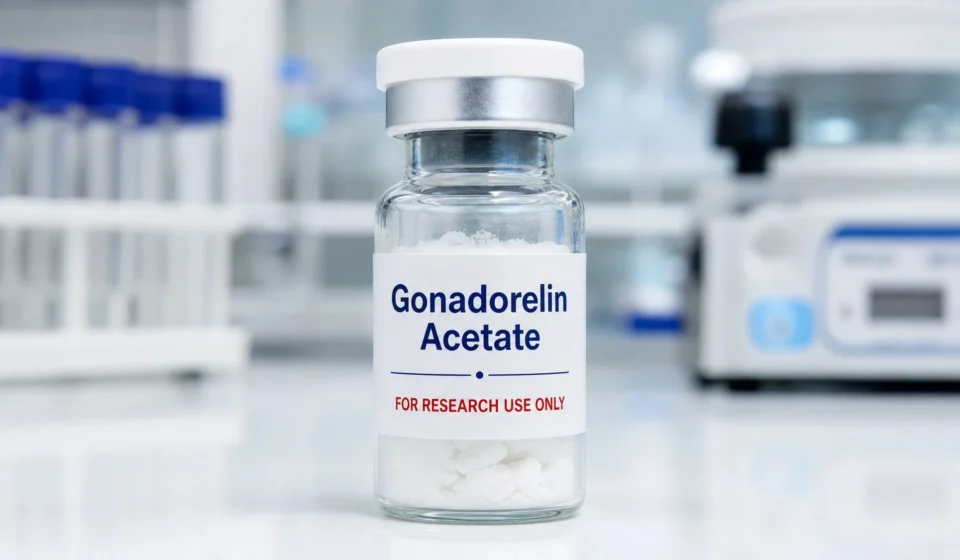
Gonadorelin Acetate: Research in Hypothalamic-Pituitary-Gonadal Axis Signaling

May 13, 2026
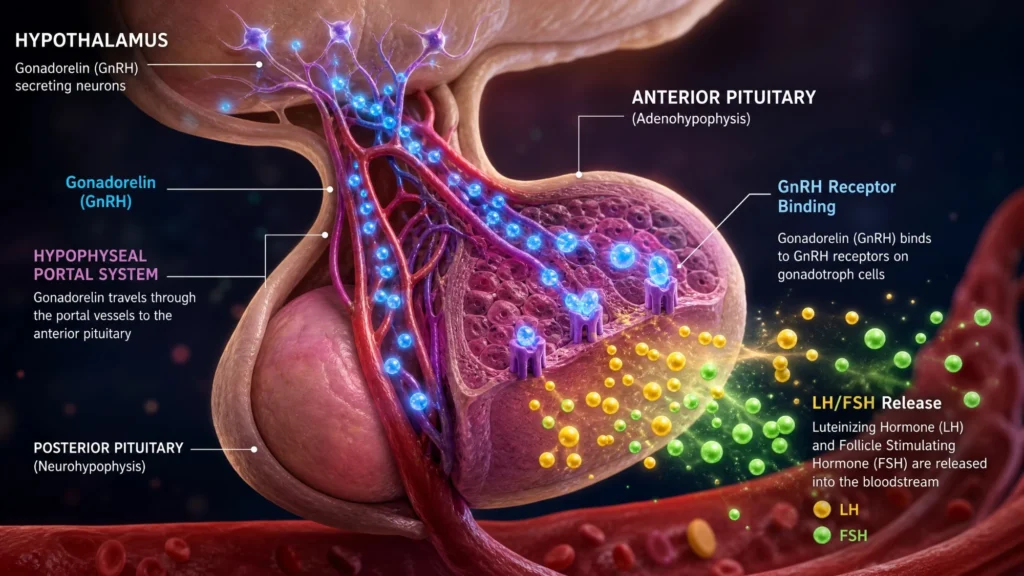
Gonadorelin Acetate is a synthetic decapeptide that research indicates is structurally and functionally identical to the endogenous Gonadotropin-Releasing Hormone (GnRH). It is a primary regulator of the Hypothalamic-Pituitary-Gonadal (HPG) axis. Extensive preclinical studies utilizing animal models have indicated the potential efficacy of Gonadorelin in stimulating the pulsatile release of Luteinizing Hormone (LH) and Follicle-Stimulating Hormone (FSH) from the anterior pituitary gland. These studies have suggested that the peptide may influence a wide array of reproductive and endocrine processes by modulating the frequency and amplitude of gonadotropin pulses.(1)
What is the mechanism by which Gonadorelin Acetate exerts its effects?
The mechanism underlying Gonadorelin Acetate’s proposed biological action involves its potential to interact with specific G-protein coupled receptors (GnRHR) located on the surface of gonadotroph cells in the pituitary gland. Upon presentation, Gonadorelin Acetate appears to bind to these receptors, potentially triggering the activation of the phospholipase C (PLC) signaling pathway. This interaction appears to cause an increase in intracellular calcium levels and the activation of protein kinase C, which is considered crucial for the synthesis and secretion of LH and FSH.
Recent investigations suggest that the response to Gonadorelin is highly dependent on the pulsatility of its administration. Studies also suggest the potential involvement of Gonadorelin in the regulation of steroidogenesis in the gonads as a secondary effect of increased gonadotropin levels. Furthermore, analysis indicated that high-frequency or continuous exposure to the peptide may potentially lead to receptor downregulation and desensitization, a phenomenon that is considered a key contributor to its dual-phase pharmacological profile in research models.(1) (2)
How was the Gonadorelin Acetate peptide discovered?
The discovery of Gonadorelin was the result of decades of research into the hypothalamic control of reproduction. In the early 1970s, Nobel Prize winners Andrew Schally and Roger Guillemin independently made significant strides in isolating and characterizing GnRH from porcine and ovine hypothalamic extracts.
In their investigations, the research teams sought to identify the specific factor responsible for the neural control of ovulation and spermatogenesis. Building upon these findings, they synthesized the decapeptide sequence that would become known as Gonadorelin. Specifically, the acetate salt version was developed to enhance its stability and solubility for laboratory use. This discovery allowed researchers to target the specific protein-protein interactions necessary for endocrine regulation and provided a foundational model for studying hypothalamic-pituitary disorders in laboratory settings.(3)
Research Studies on Gonadorelin Acetate
Gonadorelin Acetate and Pituitary Response Dynamics
The role of Gonadorelin Acetate in endocrine signaling was investigated to elucidate its potential to restore gonadotropin levels in deficient models. Using rodent subjects, the impact of Gonadorelin was evaluated on the timing and magnitude of LH and FSH peaks. This study suggested that Gonadorelin may significantly increase the secretory response compared to findings yielded by the control group. Histological analyses revealed that upon Gonadorelin introduction, it may potentially yield improved pituitary sensitivity and probably result in enhanced downstream testosterone or estrogen production. Mechanistically, Gonadorelin appears to activate the GnRHR pathway, potentially promoting the restoration of HPG axis homeostasis.(4)
Gonadorelin Acetate and Steroidogenesis Regulation
This study aimed to investigate the role of Gonadorelin as a modulator of gonadal function and germ cell development. Results indicate that Gonadorelin potentially interacts with the feedback loops of the pituitary-gonadal axis, resulting in potential positive regulation of the maturation process in research models. In vitro experiments using pituitary cell cultures suggest that the peptide may play a role in gene transcription for the alpha and beta subunits of gonadotropins, as indicated by potential differential regulation of mRNA levels. Research further suggests that in damaged axis models, the influence of Gonadorelin may synergistically accelerate the recovery of reproductive markers. Researchers state that “Gonadorelin, as a native GnRH agonist, disrupted the inhibition of the reproductive axis and activated intrinsic hormonal pathways in vitro.”(5)
Synopsis
Gonadorelin Acetate appears to be a promising modulator of the hypothalamic-pituitary-gonadal signaling pathways. By stimulating the GnRH receptor and disrupting the negative effects of hormonal deficiencies, Gonadorelin appears to activate the body’s innate reproductive signaling mechanisms, potentially leading to enhanced cellular responses and improved endocrine markers in research models. Studies have suggested its potential in treating hypothalamic amenorrhea and exploring the fundamental mechanisms of puberty. Further investigations are warranted to fully elucidate its underlying mechanisms and evaluate its applications in scientific research.
NOTE: These products are intended for laboratory research use only. This peptide is not intended for personal use. Please review and adhere to our Terms and Conditions before ordering.
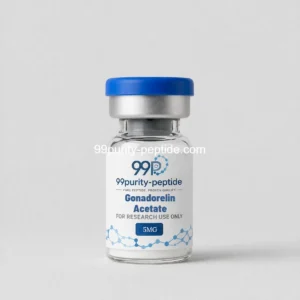
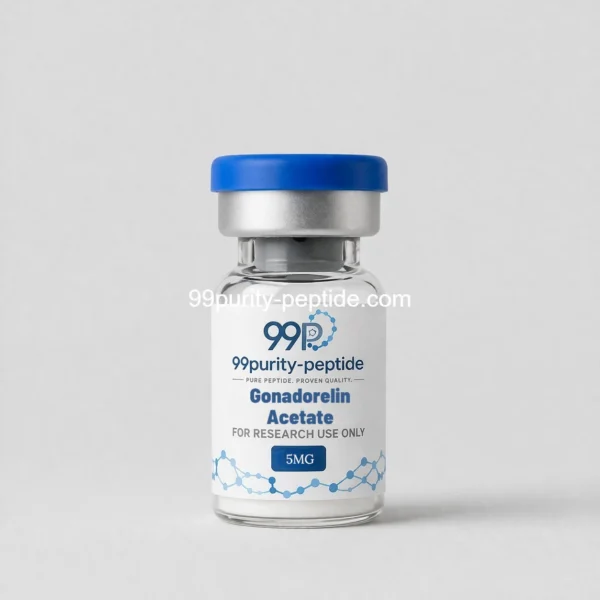
Gonadorelin Acetate 5mg – GnRH Receptor Agonism & Pulsatile Signaling Research
A high-purity GnRH analog. Optimized for laboratory research into pituitary stimulation, natural testosterone pathways, and HPTA axis recovery protocols following physiological stress.