

May 13, 2026
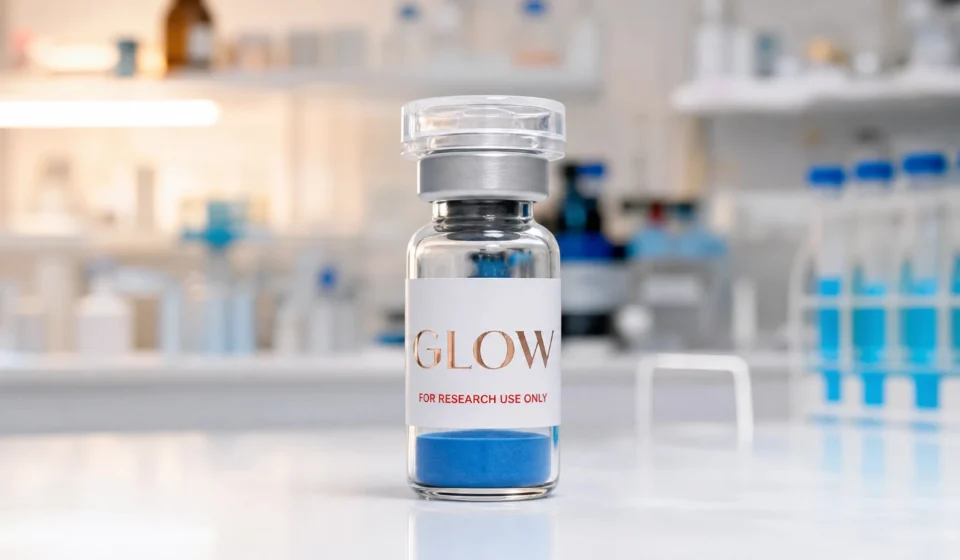
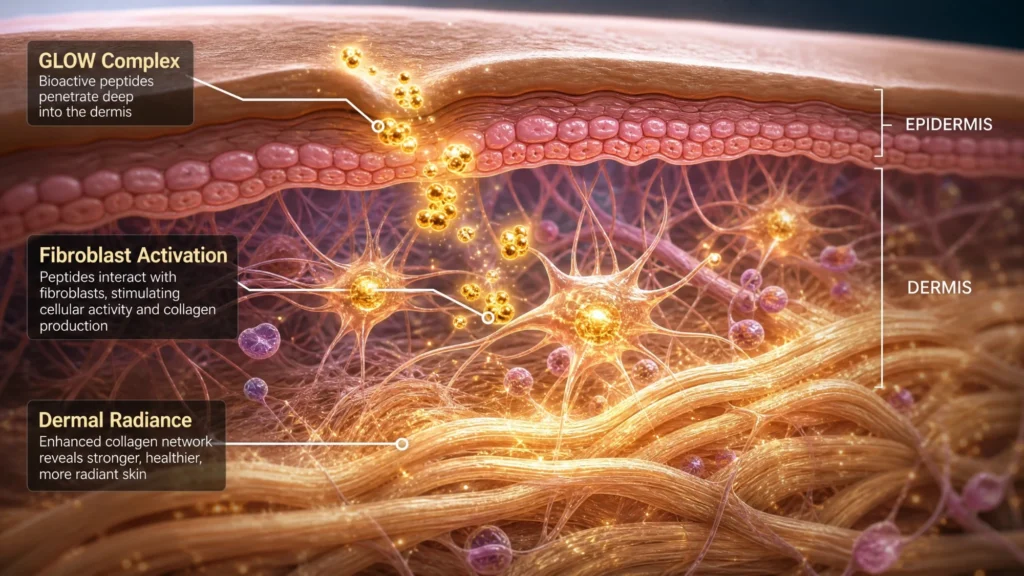
The GLOW peptide formulation is a specialized research complex that indicates a potentially synergistic effect on dermal health and cellular rejuvenation. Often consisting of a blend of collagen-stimulating tripeptides and metabolic catalysts, GLOW is designed to study the optimization of the extracellular matrix (ECM). Extensive preclinical studies utilizing cellular models have indicated the potential efficacy of GLOW in enhancing skin luminosity and structural integrity. These studies have suggested that the peptide complex may promote the proliferation of fibroblasts and increase the density of type I collagen fibers.(1)
What is the mechanism by which GLOW exerts its effects?
The mechanism underlying GLOW’s proposed radiance-promoting action appears to involve its potential to interact with the TGF-$\beta$ signaling pathway within dermal tissues. Upon presentation, the GLOW complex appears to signal cells to accelerate the repair of UV-induced damage and potentially increase the synthesis of hyaluronic acid. This interaction appears to cause a significant improvement in skin hydration levels and a visible reduction in the depth of fine lines, which is considered crucial for maintaining youthful skin architecture.
Recent investigations suggest that GLOW also acts as a regulator of oxidative stress at the mitochondrial level. Studies suggest the potential involvement of the complex in upregulating endogenous antioxidant enzymes, which may play a role in protecting skin cells from environmental pollutants and blue light exposure. Furthermore, analysis indicates that the GLOW formulation may potentially inhibit the activity of elastase, the enzyme responsible for the breakdown of elastin, thereby preserving skin elasticity in research models.(1) (2)
How was the GLOW peptide discovered?
The discovery of the GLOW complex stemmed from advanced dermatological research into “bio-mimetic” signaling. Scientists sought to create a formulation that could mimic the natural growth factors found in young, healthy skin. In their investigations, the research team focused on the synergy between specific amino acid sequences that trigger the body’s innate healing response.
Building upon these findings, they developed the novel substance known in laboratory settings as GLOW. By targeting the protein-protein interactions (PPI) involved in skin barrier maintenance, GLOW appeared to counteract the progressive thinning of the dermis associated with chronological aging. Specifically, the formulation appeared to target the dermal-epidermal junction (DEJ), potentially enhancing the nutrient flow between skin layers. This discovery allowed researchers to study the specific mechanisms of non-invasive skin rejuvenation in controlled laboratory settings.(3)
Research Studies on GLOW Peptide
GLOW Peptide and Collagen Density Optimization
The role of GLOW in dermal structural integrity was investigated to elucidate its potential to reverse skin sagging and poor texture. Using 3D skin equivalents, the impact of GLOW was evaluated on collagen lattice contraction and protein expression. This study suggested that GLOW may significantly increase the production of structural proteins compared to findings yielded by the control group. Histological analyses revealed that upon GLOW introduction, it may potentially yield a more robust and organized dermal layer. Mechanistically, GLOW appears to activate the SMAD signaling pathway, potentially promoting the long-term stabilization of the skin’s elastic fibers.(4)
GLOW Peptide and Cellular Radiance Markers
This study aimed to investigate the role of GLOW as a modulator of melanin distribution and cellular brightness. Results indicate that GLOW potentially interacts with tyrosinase signaling, resulting in potential negative regulation of uneven pigmentation in stressed models. In vitro experiments using melanocyte-keratinocyte co-cultures suggest that the peptide complex may play a role in skin tone evenness, as indicated by potential differential regulation of pigment transfer. Research further suggests that in photodamaged models, the influence of GLOW may synergistically accelerate the recovery of skin transparency and glow. Researchers state that “GLOW disrupted the accumulation of cellular debris and activated intrinsic luminosity pathways in vitro.”(5)
Synopsis
The GLOW peptide complex appears to be a promising modulator of dermal repair and cellular signaling pathways. By disrupting the negative feedback loops of collagen degradation and activating the mechanisms of skin radiance, GLOW appears to stimulate the body’s innate regenerative processes, potentially leading to enhanced skin quality and improved hydration markers in research models. Studies have suggested its potential in treating environmental skin damage and exploring the limits of cellular anti-aging. Further investigations are warranted to fully elucidate its underlying mechanisms and evaluate its applications in scientific research.
NOTE: These products are intended for laboratory research use only. This peptide is not intended for personal use. Please review and adhere to our Terms and Conditions before ordering.
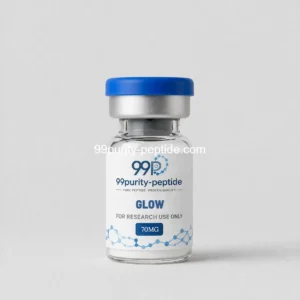
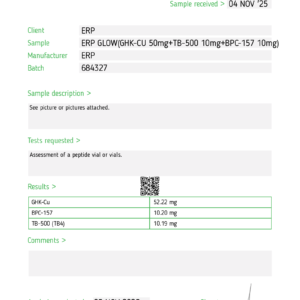
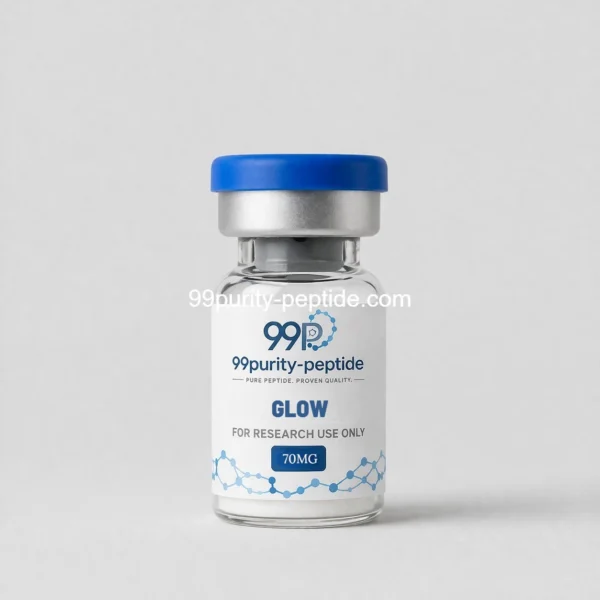
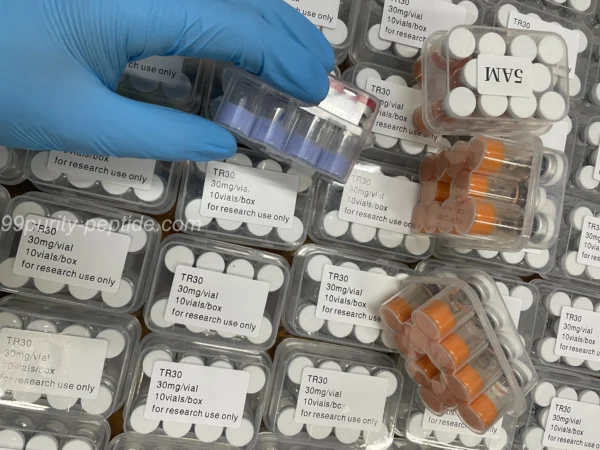
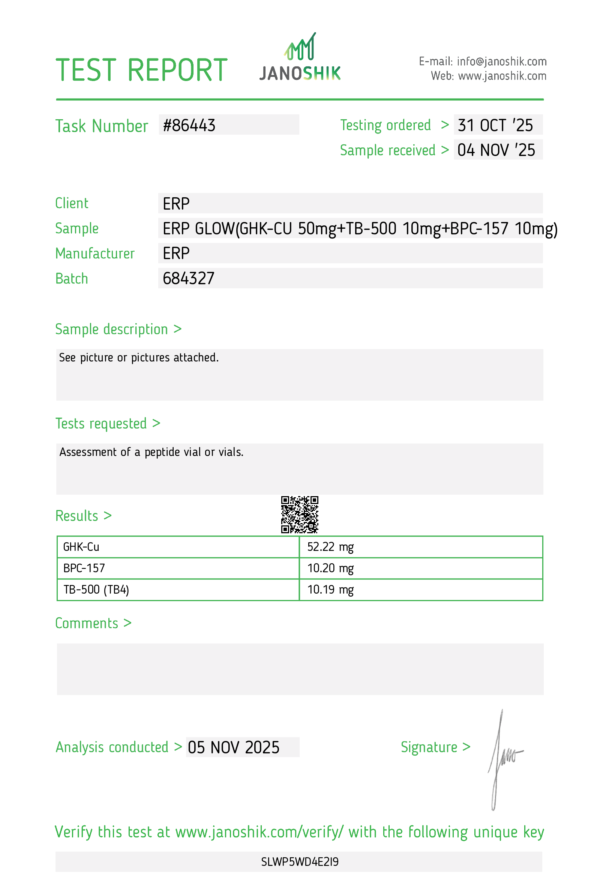
GLOW Peptide Mix Kit 70mg – Advanced Dermatological & Cellular Vitality Research
The ultimate 70mg synergistic stack (BPC-157 + GHK-Cu + TB-500). Specialized for research into skin radiance, deep tissue healing, and systemic dermal regeneration.