

May 13, 2026
Human Chorionic Gonadotropin (HCG) is a complex glycoprotein hormone that research indicates is a potent agonist of the Luteinizing Hormone/Chorionic Gonadotropin (LHCG) receptor. While naturally produced by the placenta during pregnancy, HCG is structurally similar to Luteinizing Hormone (LH) and shares the same alpha subunit. Extensive preclinical studies utilizing animal models have indicated the potential efficacy of HCG in maintaining and stimulating steroidogenesis, particularly in the gonads. These studies have suggested that the peptide may serve as a powerful tool for investigating the restoration of hormonal homeostasis and the protection of reproductive tissues.(1)
What is the mechanism by which HCG exerts its effects?
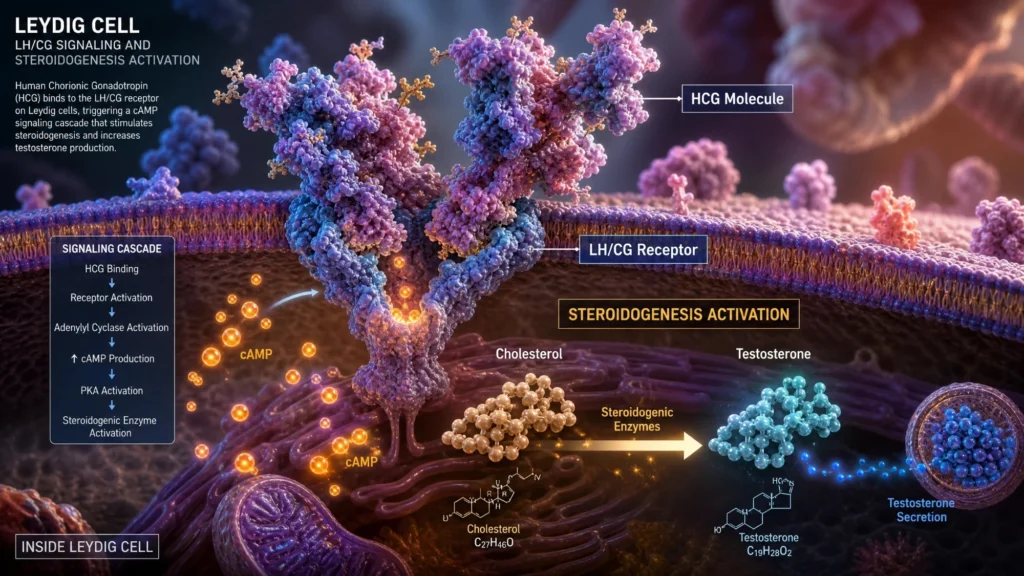
The mechanism underlying HCG’s proposed biological action involves its potential to interact with the LHCG receptors located on the surface of Leydig cells in males and follicular cells in females. Upon presentation, HCG appears to bind to these receptors with a significantly longer half-life than endogenous LH. This interaction appears to cause the activation of the adenylyl cyclase pathway, potentially leading to an increase in intracellular cyclic AMP (cAMP).
This cascade is considered crucial for the conversion of cholesterol into pregnenolone, the precursor to various steroid hormones, including testosterone and progesterone. Recent investigations suggest that HCG also acts as a neurotrophic factor in certain neural tissues. Studies suggest the potential involvement of HCG in modulating neurosteroid production, which may play a role in neuroprotection and the regulation of mood-related signaling in research models.(1) (2)
How was the HCG peptide discovered?
The discovery of HCG dates back to the late 1920s, when researchers Aschheim and Zondek identified a gonad-stimulating substance in the urine of pregnant women. In their investigations, they observed that this substance could induce rapid maturation of the reproductive system in immature animal models.
Building upon these findings, scientists isolated the glycoprotein and characterized its heterodimeric structure, consisting of alpha and beta subunits. Specifically, the beta subunit of HCG was found to contain a unique C-terminal peptide extension that provides its characteristic metabolic stability. This discovery allowed researchers to target the specific protein-protein interactions necessary for sustained gonadotropic stimulation and provided a foundational model for studying the Hypothalamic-Pituitary-Gonadal (HPG) axis in laboratory settings.(3)
Research Studies on HCG Peptide
HCG Peptide and Intratesticular Testosterone Regulation
The role of HCG in endocrine signaling was investigated to elucidate its potential to maintain steroidogenesis during periods of pituitary suppression. Using rodent models, the impact of HCG was evaluated on intratesticular testosterone levels and the underlying molecular mechanisms. This study suggested that HCG may significantly preserve hormone production compared to findings yielded by the control group. Histological analyses revealed that upon HCG introduction, it may potentially yield improved Leydig cell function and probably result in enhanced germ cell survival. Mechanistically, HCG appears to activate the LHCG receptor pathway, potentially promoting the maintenance of reproductive markers.(4)
HCG Peptide and Neuro-Signaling Modulation
This study aimed to investigate the role of HCG as a modulator of neural pathways and cognitive function. Results indicate that HCG potentially interacts with receptors in the hippocampus and hypothalamus, resulting in potential positive regulation of neurogenesis in research models. In vitro experiments using neuronal cultures suggest that the peptide may play a role in synaptic plasticity, as indicated by potential differential regulation of brain-derived neurotrophic factor (BDNF). Research further suggests that in damaged axis models, the influence of HCG may synergistically reduce neuro-inflammation and potentially improve the structural integrity of neural circuits. Researchers state that “HCG, as a potent LH mimetic, disrupted the decline of endocrine-neural feedback and activated intrinsic protective pathways in vitro.”(5)
Synopsis
The HCG peptide appears to be a promising modulator of gonadotropic and neuro-signaling pathways. By mimicking the action of LH and disrupting the negative effects of hormonal suppression, HCG appears to activate the body’s innate steroidogenic mechanisms, potentially leading to enhanced cellular responses and improved endocrine markers in research models. Studies have suggested its potential in treating hypogonadism and exploring neuroprotective strategies. Further investigations are warranted to fully elucidate its underlying mechanisms and evaluate its applications in scientific research.
NOTE: These products are intended for laboratory research use only. This peptide is not intended for personal use. Please review and adhere to our Terms and Conditions before ordering.
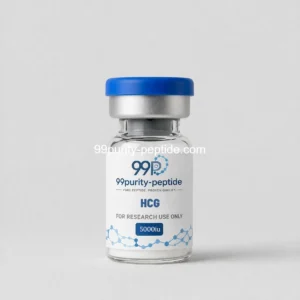
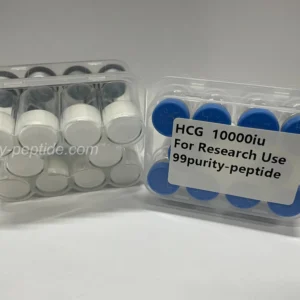
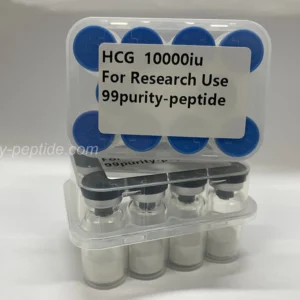
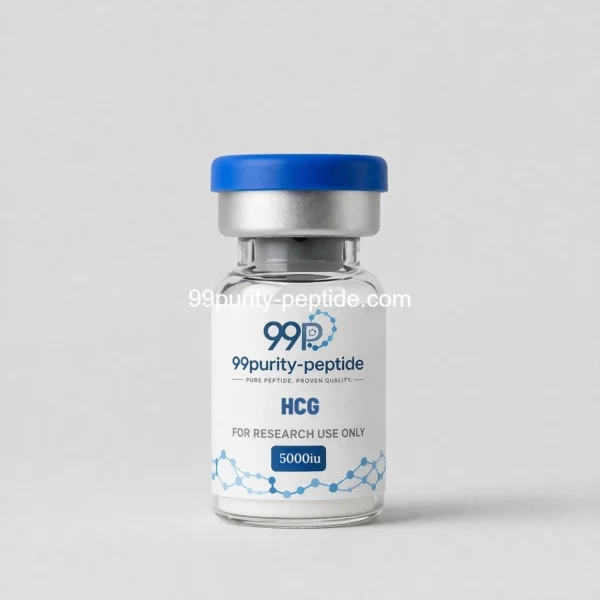
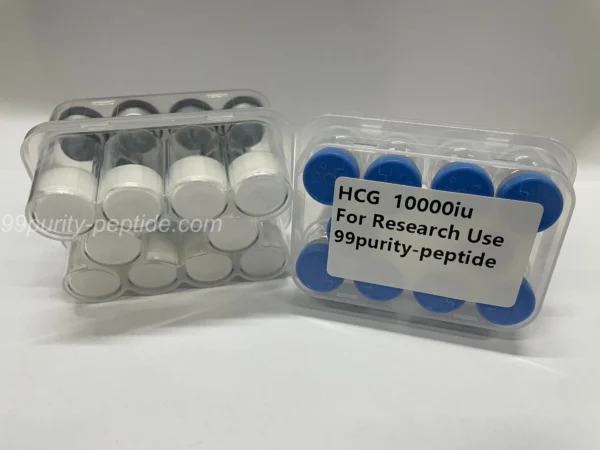
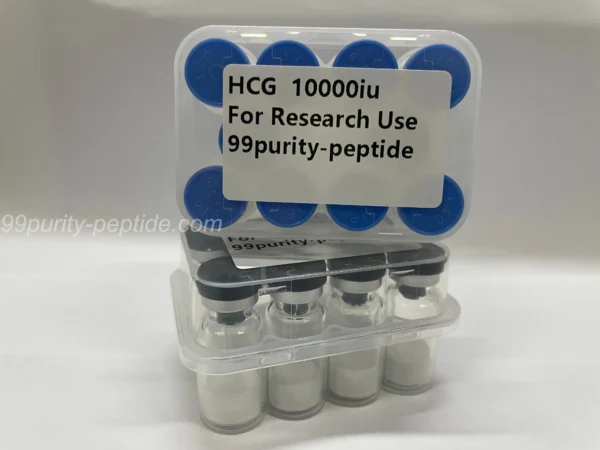
HCG (Human Chorionic Gonadotropin) 5000iu – LH/hCG Receptor Agonism & Steroidogenic Signaling Research
High-purity Human Chorionic Gonadotropin (HCG). Engineered for laboratory research into LH mimicry, natural testosterone pathways, and the maintenance of testicular function during physiological stress.