

May 11, 2026
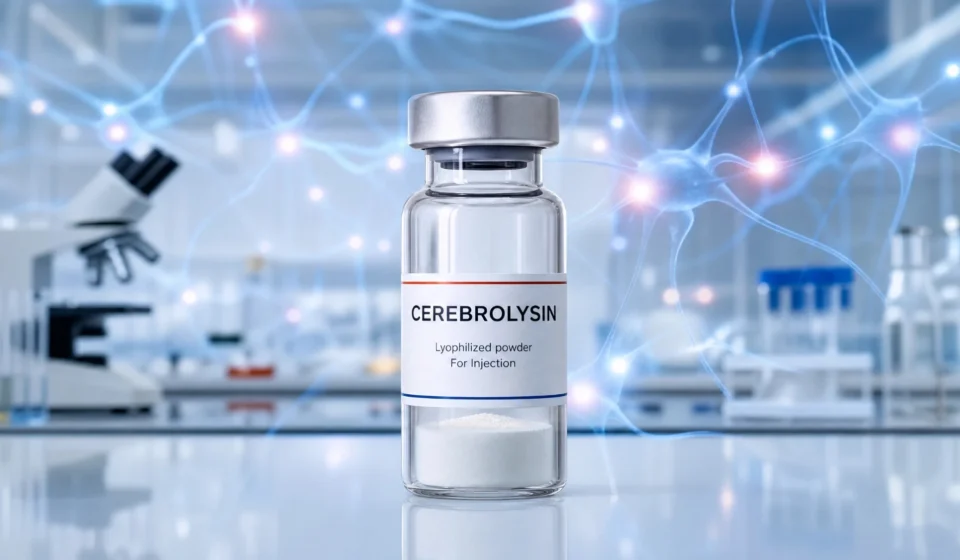
Cerebrolysin is a multi-modal peptide preparation produced by the standardized enzymatic breakdown of purified porcine brain proteins. Unlike single-sequence synthetic peptides, Cerebrolysin is a complex mixture consisting of approximately 15% low-molecular-weight peptides and 85% free amino acids. Research indicates that Cerebrolysin acts as a powerful neurotrophic agent, mimicking the effects of endogenous neurotrophins such as Brain-Derived Neurotrophic Factor (BDNF) and Nerve Growth Factor (NGF).
Preclinical and clinical investigations have positioned Cerebrolysin as a primary subject in neurology research, particularly for its potential to protect neurons from metabolic stress and stimulate the formation of new synaptic connections in models of neurodegeneration and stroke.
What is the mechanism by which Cerebrolysin exerts its effects?
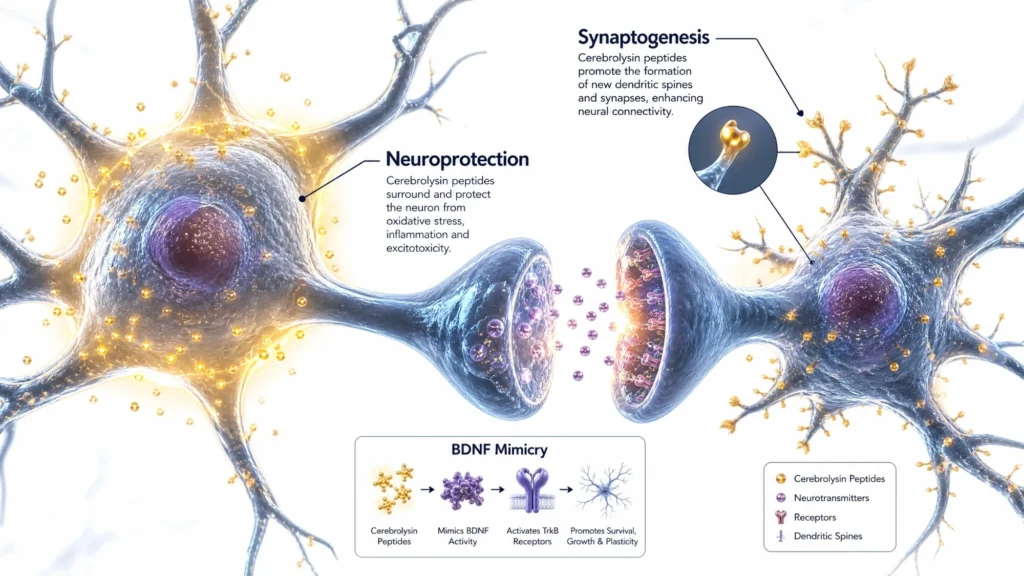
The primary mechanism underlying Cerebrolysin’s action involves its neuroprotective and neurorestorative properties. Because the peptides in Cerebrolysin are small enough to cross the blood-brain barrier, they can interact directly with neurons and glial cells.
Upon introduction into a research model, Cerebrolysin appears to:
- Reduce Neuroinflammation: It inhibits the activation of microglia and the release of pro-inflammatory cytokines, which are key drivers of brain tissue damage.
- Inhibit Apoptosis: Research suggests that Cerebrolysin prevents programmed cell death by inhibiting the calpain and caspase pathways, especially under conditions of hypoxia or ischemia.
- Promote Synaptogenesis: It appears to stimulate the growth of dendrites and the formation of new synapses, effectively “rewiring” damaged neural circuits.
- Decrease Beta-Amyloid Deposition: In models of cognitive decline, Cerebrolysin has been observed to reduce the accumulation of amyloid plaques and tau phosphorylation, two hallmarks of Alzheimer’s-type pathology.
How was Cerebrolysin developed in research?
Cerebrolysin has a long history in pharmacological research, originating from the study of “organotherapy”—the use of organ extracts to treat specific tissue deficiencies. By applying modern biotechnological methods, researchers were able to create a highly refined, protein-free solution that ensures consistent concentrations of biologically active neuro-peptides.
Unlike synthetic single-peptide alternatives (like P21), Cerebrolysin provides a “cocktail” of natural signals. This complexity is believed to be its greatest strength, as it addresses multiple stages of the “ischemic cascade” simultaneously, rather than targeting a single receptor.
Research Studies on Cerebrolysin
Cerebrolysin and Acute Ischemic Stroke Recovery
The role of Cerebrolysin in post-stroke recovery was investigated in large-scale clinical research models. Results indicated that early administration of Cerebrolysin significantly improved motor and cognitive outcomes compared to standard care alone. Researchers noted that the peptide appeared to extend the “therapeutic window,” protecting brain tissue that would otherwise have been lost to secondary damage.
Cerebrolysin and Traumatic Brain Injury (TBI)
This study aimed to investigate the neurorestorative potential of Cerebrolysin following physical trauma to the brain. Results suggested that the peptide promoted the migration of neural stem cells to the site of injury. Mechanistically, this supports the theory that Cerebrolysin does not just protect existing neurons but may actually facilitate the regeneration of the neural environment.
Synopsis
Cerebrolysin appears to be one of the most comprehensive neurotrophic agents available for scientific research. By mimicking natural brain growth factors and suppressing neurotoxic pathways, it offers a multi-dimensional approach to studying brain repair and cognitive preservation. Its established history and unique peptide profile make it an essential tool for investigating the frontiers of neuroregeneration.
NOTE: These products are intended for laboratory research use only. This preparation is not intended for personal use. Please review and adhere to our Terms and Conditions before ordering.

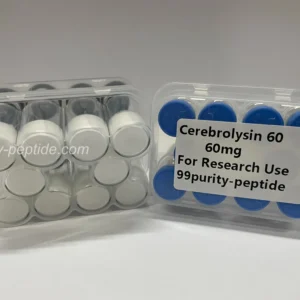
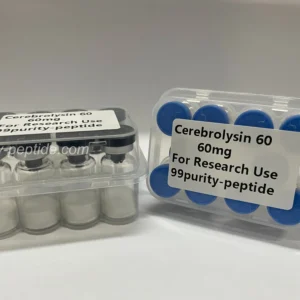
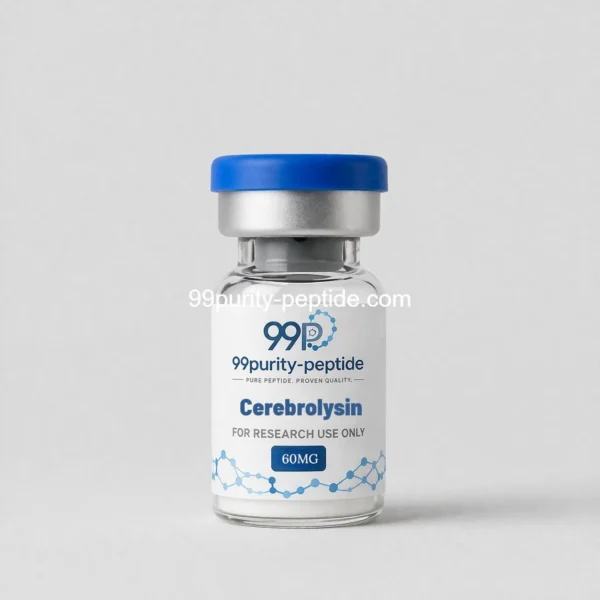
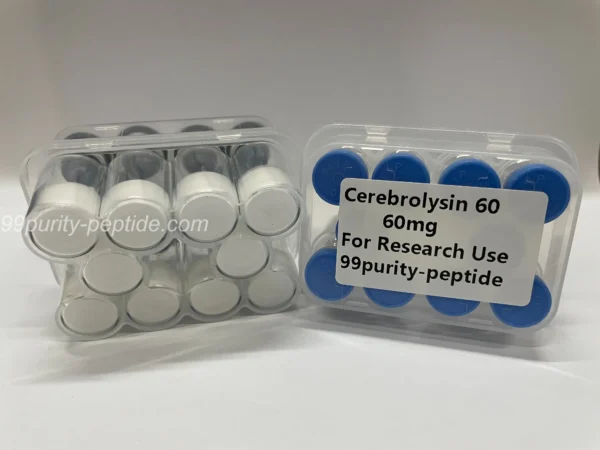
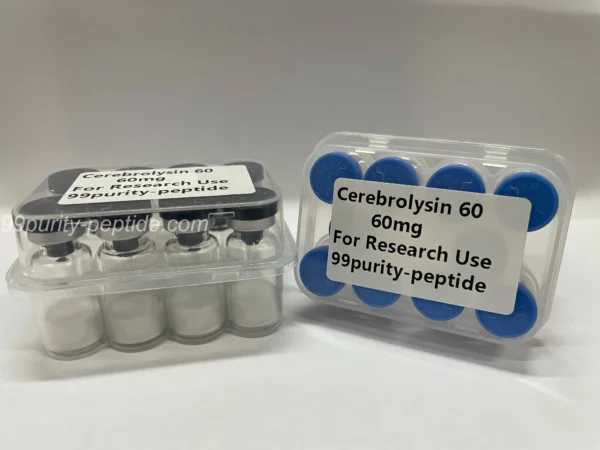
Cerebrolysin 60mg – Low-Molecular-Weight Peptides & Neuroprotection Research
A complex porcine-derived peptide blend. Engineered for research into neurotrophic support, synaptic plasticity, and the restoration of cognitive function under stress.