


May 13, 2026
Dulaglutide is a synthetic fusion protein and long-acting glucagon-like peptide-1 (GLP-1) receptor agonist that research indicates is a powerful modulator of metabolic signaling. Unlike native GLP-1, which has an extremely short half-life due to rapid enzymatic degradation, Dulaglutide is engineered to be resistant to dipeptidyl peptidase-4 (DPP-4). Extensive preclinical studies utilizing animal models have indicated the potential efficacy of Dulaglutide in improving glycemic control and influencing body composition. These studies have suggested that the peptide may enhance glucose-dependent insulin secretion and potentially reduce caloric intake through central appetite regulation.(1)
What is the mechanism by which Dulaglutide exerts its effects?
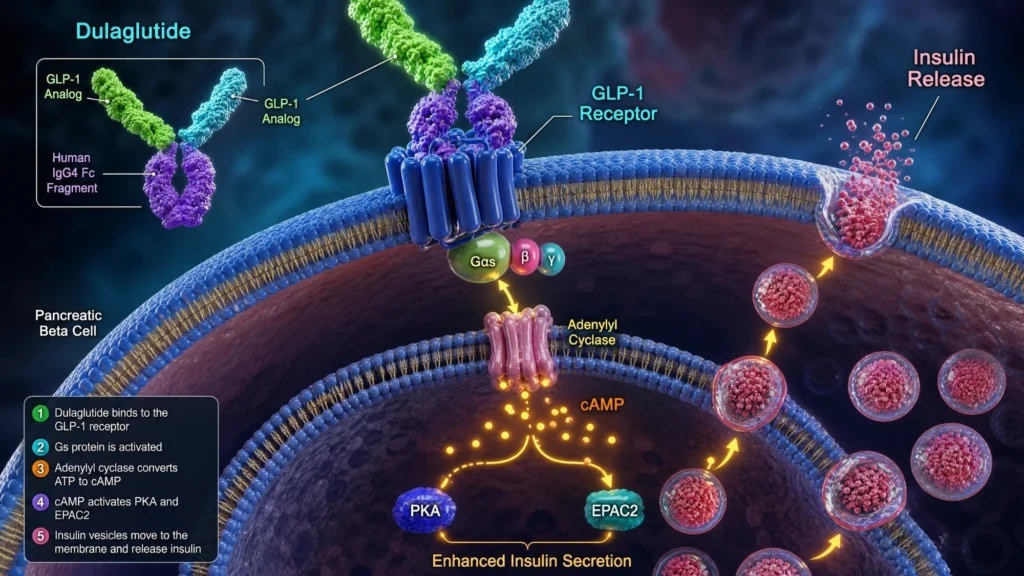
The mechanism underlying Dulaglutide’s proposed metabolic action involves its potential to interact with the GLP-1 receptors located in the pancreatic beta cells and the central nervous system. Upon presentation, Dulaglutide appears to mimic the effects of endogenous GLP-1, potentially stimulating the adenylyl cyclase pathway. This interaction appears to cause an increase in intracellular cyclic AMP (cAMP), which is considered crucial for the potentiation of insulin release in response to elevated glucose levels.
Recent investigations suggest that Dulaglutide also acts as a regulator of gastric emptying and satiety signaling. Studies suggest that by activating GLP-1 receptors in the hypothalamus, the peptide may play a role in suppressing appetite and potentially leading to weight reduction in research models. Furthermore, the structural fusion of two GLP-1 analogues to a modified human IgG4 heavy chain fragment appears to provide the metabolic stability necessary for sustained signaling.(1) (2)
How was the Dulaglutide peptide discovered?
The development of Dulaglutide was driven by the need for a stable, long-acting GLP-1 analogue that could overcome the limitations of natural incretin hormones. Researchers at Eli Lilly and Company utilized recombinant DNA technology to create a large fusion protein that would avoid renal filtration and enzymatic breakdown.
In their investigations, the research team focused on fusing a GLP-1 analogue with an Fc fragment of a human immunoglobulin. This design appeared to target the balance between high receptor affinity and a prolonged circulatory half-life. Specifically, the modified IgG4 fragment appeared to reduce the risk of immune system activation while ensuring the peptide remained biologically active for extended periods. Building upon these findings, Dulaglutide emerged as a primary candidate for studying long-term metabolic homeostasis and the treatment of obesity-related pathologies in laboratory settings.(3)
Research Studies on Dulaglutide Peptide
Dulaglutide Peptide and Insulin Secretion Efficiency
The role of Dulaglutide in pancreatic beta-cell function was investigated to elucidate its potential to reverse glucose intolerance. Using a mouse model of metabolic syndrome, the impact of Dulaglutide was evaluated on insulin response and beta-cell mass preservation. This study suggested that Dulaglutide may significantly increase glucose-dependent insulin secretion compared to findings yielded by the control group. Histological analyses revealed that upon Dulaglutide introduction, it may potentially result in improved beta-cell survival and probably result in enhanced glycemic stability. Mechanistically, Dulaglutide appears to stabilize the GLP-1 receptor in an active state, potentially promoting downstream metabolic cascades.(4)
Dulaglutide Peptide and Weight Loss Dynamics
This study aimed to investigate the role of Dulaglutide as a modulator of energy expenditure and food intake. Results indicate that Dulaglutide potentially interacts with pro-opiomelanocortin (POMC) neurons, resulting in potential negative regulation of hunger signals. In vitro experiments using adipocyte cultures suggest that the peptide may play a role in lipid metabolism, as indicated by potential differential regulation of lipolysis markers. Research further suggests that in high-fat diet models, the combined influence of Dulaglutide and caloric restriction may synergistically accelerate weight loss and improve metabolic markers. Researchers state that “Dulaglutide, as a potent GLP-1 receptor agonist, disrupted high-fat-induced metabolic dysfunction and activated sustained weight loss pathways in vitro.”(5)
Synopsis
The Dulaglutide peptide appears to be a promising modulator of metabolic and glycemic signaling pathways. By utilizing its unique fusion protein structure to bypass DPP-4 degradation, Dulaglutide appears to activate the GLP-1 receptor pathway with high efficiency, potentially leading to enhanced insulin regulation and weight loss in research models. Studies have suggested its potential in treating metabolic disorders and accelerating cutaneous wound healing through improved glucose utilization. Further investigations are warranted to fully elucidate its underlying mechanisms and evaluate its applications in scientific research.
NOTE: These products are intended for laboratory research use only. This peptide is not intended for personal use. Please review and adhere to our Terms and Conditions before ordering.
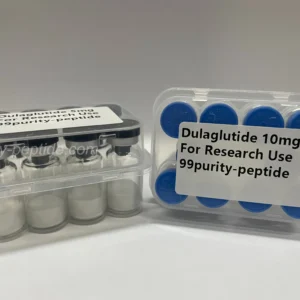
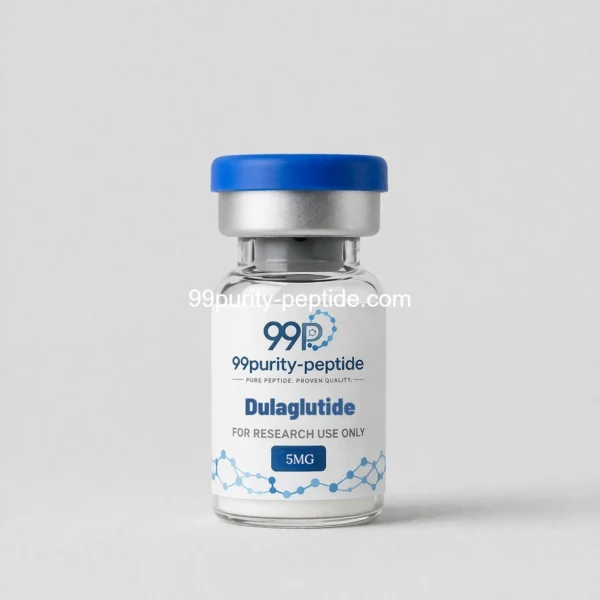
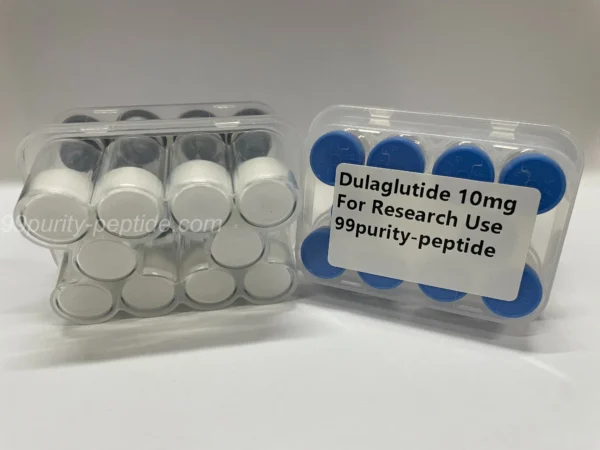
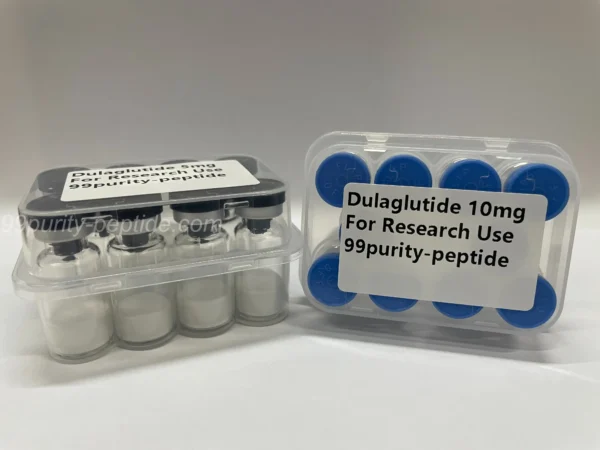
Dulaglutide 5mg – GLP-1R Agonism & IgG4-Fc Fusion Protein Kinetics Research
99Purity-Peptide provides Dulaglutide 5mg. Long-acting GLP-1 analog for research into weight management and metabolic pathways.