

May 13, 2026
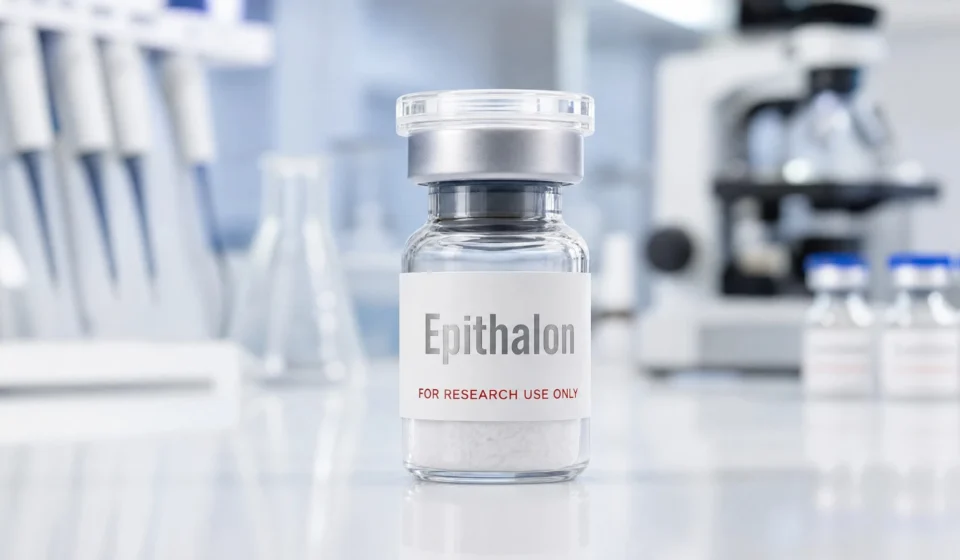
Epithalon (also known as Epitalon) is a synthetic tetrapeptide that research indicates is a potentially potent modulator of the aging process through its interaction with the pineal gland and chromosomal structures. Derived from the natural peptide Epithalamin found in the bovine pineal gland, Epithalon consists of the sequence Ala-Glu-Asp-Gly. Extensive preclinical studies utilizing animal models have indicated the potential efficacy of Epithalon in extending lifespan and delaying age-related pathologies. These studies have suggested that the peptide may influence cellular longevity by promoting the expression of telomerase, the enzyme responsible for maintaining the integrity of telomeres during cell division.(1)
What is the mechanism by which Epithalon exerts its effects?
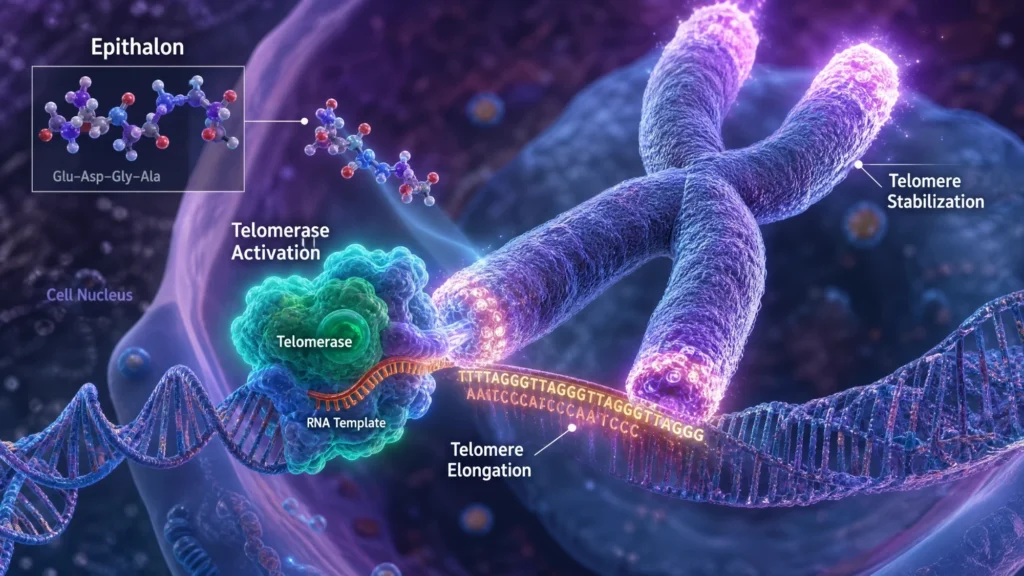
The mechanism underlying Epithalon’s proposed anti-aging action appears to involve its potential to interact with the genetic regulation of telomerase activity. Upon presentation, Epithalon appears to penetrate the cell nucleus and possibly modulate the expression of the hTERT gene. Once active, it may selectively bind to DNA promoter regions, potentially stimulating the production of telomerase. This interaction appears to cause the elongation or stabilization of telomeres, which is considered crucial for preventing cellular senescence and maintaining the replicative capacity of somatic cells.
Recent investigations suggest that Epithalon also acts as a regulator of the neuroendocrine system. Studies suggest the potential involvement of the peptide in enhancing the synthesis of melatonin by the pineal gland, which may play a role in restoring circadian rhythms and improving antioxidant defense mechanisms. Furthermore, analysis indicated possible inhibitory effects of Epithalon on the development of spontaneous tumors in aging models, further validating its significance in geriatric research.(1) (2)
How was the Epithalon peptide discovered?
Professor Vladimir Khavinson and his research team at the St. Petersburg Institute of Bioregulation and Gerontology in Russia made significant strides in elucidating the role of short-chain peptides in biological aging. In their investigations, Professor Khavinson’s team observed that extracts from the pineal gland possessed remarkable regenerative properties.
Specifically, they sought to isolate the active component responsible for the longevity-promoting effects of these extracts. Through rigorous analysis, they developed a novel synthetic substance called Epithalon, which appeared to replicate the biological activity of the naturally occurring Epithalamin but with a more stable and simplified structure. By targeting the fundamental drivers of aging at the chromosomal level, Epithalon was designed to counteract the progressive shortening of telomeres and promote overall physiological homeostasis in elderly subjects.(3)
Research Studies on Epithalon Peptide
Epithalon Peptide and Telomere Maintenance
The role of Epithalon in telomere preservation was investigated to elucidate its potential to reverse cellular aging. Using human fibroblast cultures, the impact of Epithalon was evaluated on telomere length and the underlying molecular mechanisms. This study suggested that Epithalon may significantly increase telomerase activity, as compared to findings yielded by the control group. Histological analyses revealed that upon Epithalon introduction, it may potentially yield a prolonged replicative lifespan of cells and probably result in a decrease in biomarkers of senescence. Mechanistically, Epithalon appears to activate the hTERT pathway, potentially promoting the restoration of chromosomal protective caps.(4)
Epithalon Peptide and Circadian Regulation
This study aimed to investigate the role of Epithalon as a modulator of pineal gland function and melatonin production. Results indicate that Epithalon potentially interacts with pinealocytes, resulting in potential positive regulation of the antioxidant system in aging primates. In vitro experiments using pineal cell cultures suggest that the peptide may play a role in hormone synthesis, as indicated by potential differential regulation of serotonin and melatonin pathways. Research further suggests that in light-deprived or aging models, the influence of Epithalon may synergistically improve immune function and potentially delay the onset of age-related reproductive decline. Researchers state that “Epithalon disrupted the negative effects of pineal atrophy and activated systemic antioxidant pathways in vitro.”(5)
Synopsis
The Epithalon peptide appears to be a promising modulator of cellular longevity and neuroendocrine signaling pathways. By stimulating the production of telomerase and disrupting the negative feedback loops of cellular senescence, Epithalon appears to activate the body’s innate regenerative mechanisms, potentially leading to enhanced cellular responses and extended physiological healthspans. Studies have suggested its potential in tumor prevention and the restoration of pineal function. Further investigations are warranted to fully elucidate its underlying mechanisms and evaluate its applications in scientific research.
NOTE: These products are intended for laboratory research use only. This peptide is not intended for personal use. Please review and adhere to our Terms and Conditions before ordering.


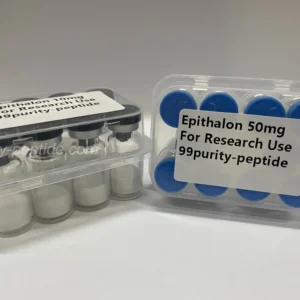
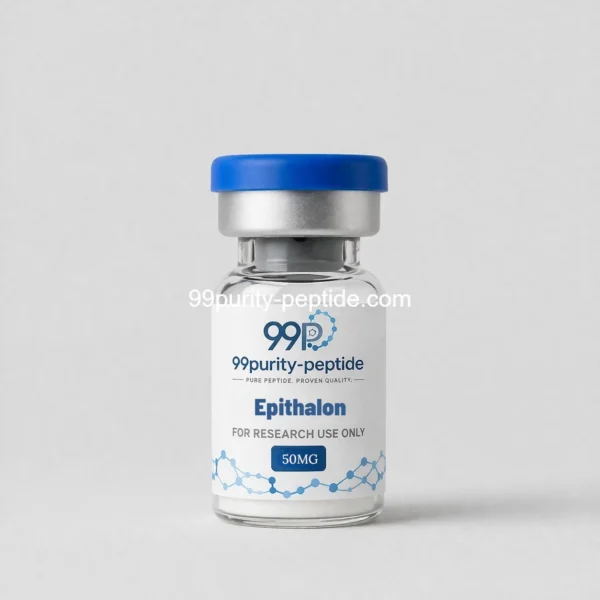

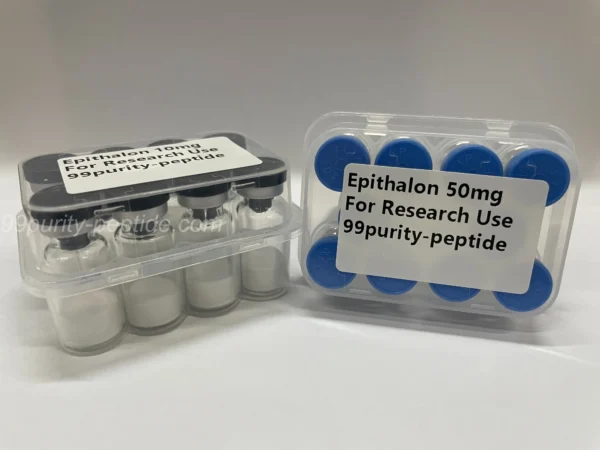

Epithalon 50mg – Telomerase Induction & Cellular Senescence Research
A premier pineal gland bioregulator. Optimized for research into telomerase activation, sleep-wake cycle regulation, and the systemic deceleration of biological aging markers.