

May 13, 2026
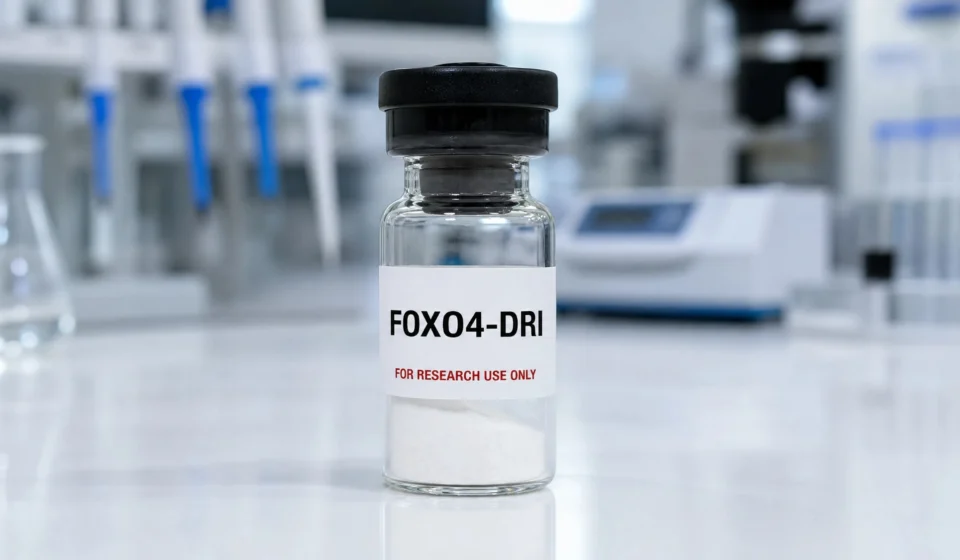
FOXO4-DRI (D-Retro-Inverso) is a synthetic peptidomimetic that research indicates is a potentially potent senolytic agent—a compound designed to selectively induce apoptosis in senescent cells. As a D-retro-inverso isoform of the FOXO4 protein’s p53-binding domain, FOXO4-DRI is engineered for enhanced metabolic stability and resistance to proteolytic degradation. Extensive preclinical studies utilizing animal models have indicated the potential efficacy of FOXO4-DRI in reversing age-related pathologies and improving organ function. These studies have suggested that the peptide may influence cellular health by disrupting the interaction between the FOXO4 transcription factor and the p53 tumor suppressor protein.(1)
What is the mechanism by which FOXO4-DRI exerts its effects?
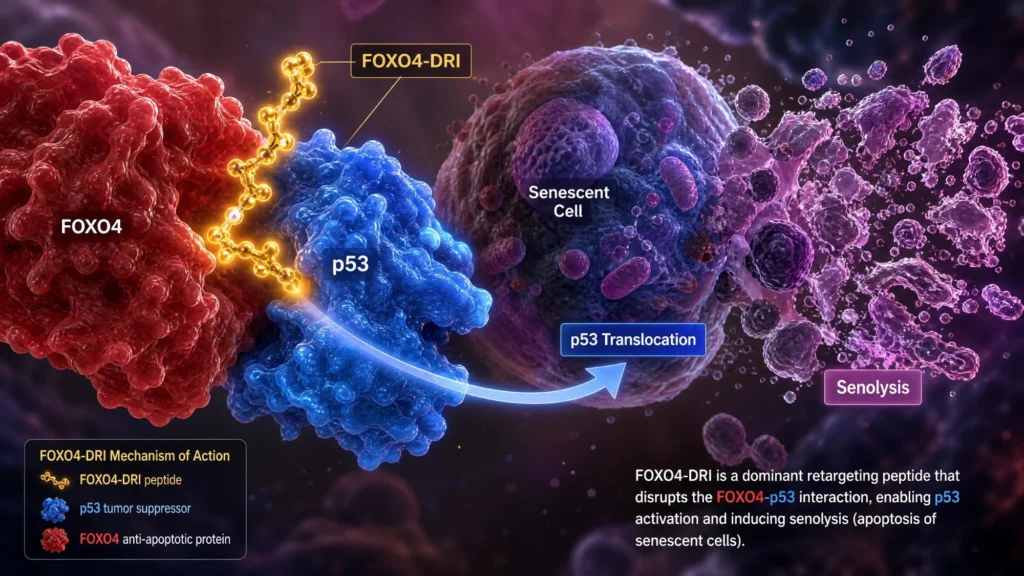
The mechanism underlying FOXO4-DRI’s proposed senolytic action appears to involve its potential to interfere with the intracellular sequestration of p53. In senescent cells, FOXO4 typically binds to p53, preventing it from translocating to the mitochondria to trigger apoptosis. Upon presentation, the FOXO4-DRI peptide appears to penetrate the cell membrane and compete for the p53 binding site. Once this protein-protein interaction is disrupted, p53 may selectively translocate into the cytoplasm and mitochondria, potentially activating the intrinsic apoptotic pathway.
This interaction appears to cause the selective elimination of senescent cells while leaving healthy, non-senescent cells unaffected. Recent investigations suggest that the D-retro-inverso modification is crucial, as it allows the peptide to maintain a bioactive side-chain topology while being invisible to standard peptidases. This structural advantage appears to facilitate sustained inhibition of the FOXO4-p53 complex, which is considered a key contributor to the survival of “zombie” cells during aging.(1) (2)
How was the FOXO4-DRI peptide discovered?
Dr. Peter de Keizer and his research team at the Erasmus University Medical Center in the Netherlands made significant strides in elucidating the molecular “brakes” that prevent senescent cells from dying. In their investigations, the team observed that senescent cells upregulated FOXO4 specifically to keep p53 at bay and avoid cell death.
Building upon these findings, they developed a novel substance called FOXO4-DRI. By utilizing the retro-inverso approach—using D-amino acids in a reversed sequence—they created a stable analog of the natural FOXO4 domain. In experimental models, this substance appeared to target the specific protein-protein interaction (PPI) necessary for senescent cell survival. The discovery was validated in fast-aging mouse models, where the introduction of FOXO4-DRI appeared to counteract frailty, restore fur density, and improve renal function by clearing the senescent cell burden.(3)
Research Studies on FOXO4-DRI Peptide
FOXO4-DRI Peptide and Senescent Cell Clearance
The role of FOXO4-DRI in senolysis was investigated to elucidate its potential to reverse tissue dysfunction. Using irradiation-induced senescence models, the impact of FOXO4-DRI was evaluated on cell viability and the expression of the Senescence-Associated Secretory Phenotype (SASP). This study suggested that FOXO4-DRI may significantly decrease the population of p16-positive senescent cells compared to findings yielded by the control group. Histological analyses revealed that upon FOXO4-DRI introduction, it may potentially result in improved tissue architecture and probably result in reduced chronic inflammation. Mechanistically, FOXO4-DRI appears to trigger p53-mediated apoptosis specifically in cells where the FOXO4-p53 shield is active.(4)
FOXO4-DRI Peptide and Organ Rejuvenation
This study aimed to investigate the role of FOXO4-DRI as a modulator of renal and hepatic health in naturally aged models. Results indicate that FOXO4-DRI potentially interacts with senescent fibroblasts and epithelial cells, resulting in potential negative regulation of fibrosis. In vitro experiments suggest that the peptide may play a role in restoring the regenerative capacity of progenitor cells, as indicated by potential differential regulation of growth factors. Research further suggests that in skin tissues, the influence of FOXO4-DRI may synergistically improve collagen density and potentially stimulate hair follicle regrowth in aged mice. Researchers state that “FOXO4-DRI, by disrupting the FOXO4-p53 interaction, disrupted the pro-inflammatory feedback loop of aging and activated restorative pathways in vivo.”(5)
Synopsis
The FOXO4-DRI peptide appears to be a promising modulator of cellular senescence and the p53 signaling pathway. By disrupting the protective feedback loop mediated by FOXO4 in aging cells, FOXO4-DRI appears to activate the apoptotic machinery necessary for senolysis, potentially leading to enhanced tissue repair and systemic rejuvenation in research models. Studies have suggested its potential in treating age-related frailty and restoring metabolic homeostasis. Further investigations are warranted to fully elucidate its underlying mechanisms and evaluate its applications in scientific research.
NOTE: These products are intended for laboratory research use only. This peptide is not intended for personal use. Please review and adhere to our Terms and Conditions before ordering.
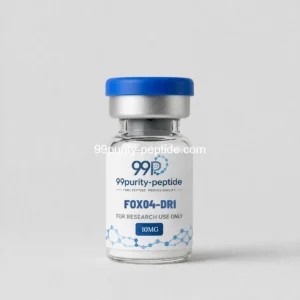
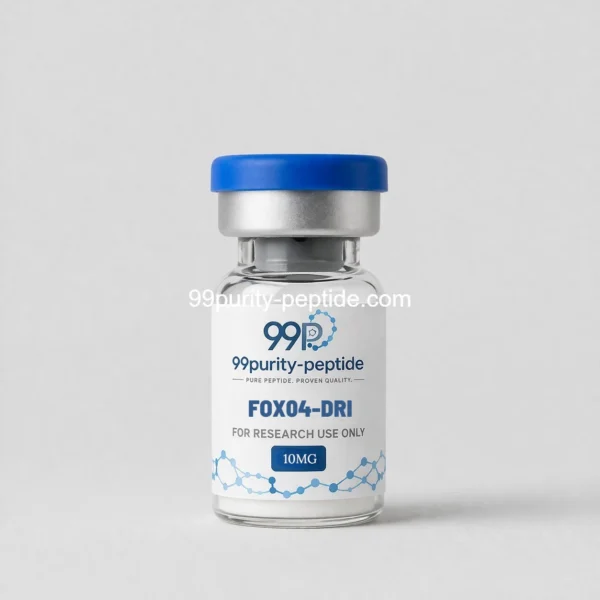
FOX04-DRI Peptide 10mg – Research into p53 Interaction & Senescent Cell Apoptosis
A specialized p53-interfering peptide. Engineered for research into senolytic cell clearance, tissue rejuvenation, and the targeted elimination of senescent cells in aging models.